How to Make a Room Look Expensive (Without Spending a Fortune)
How to make a room look expensive on any budget: editing the clutter, a tight cohesive palette, scaling up art and lighting, layering texture, getting curtains and rugs right, and the small details that read as money.
Room Reveal Team
June 27, 2026
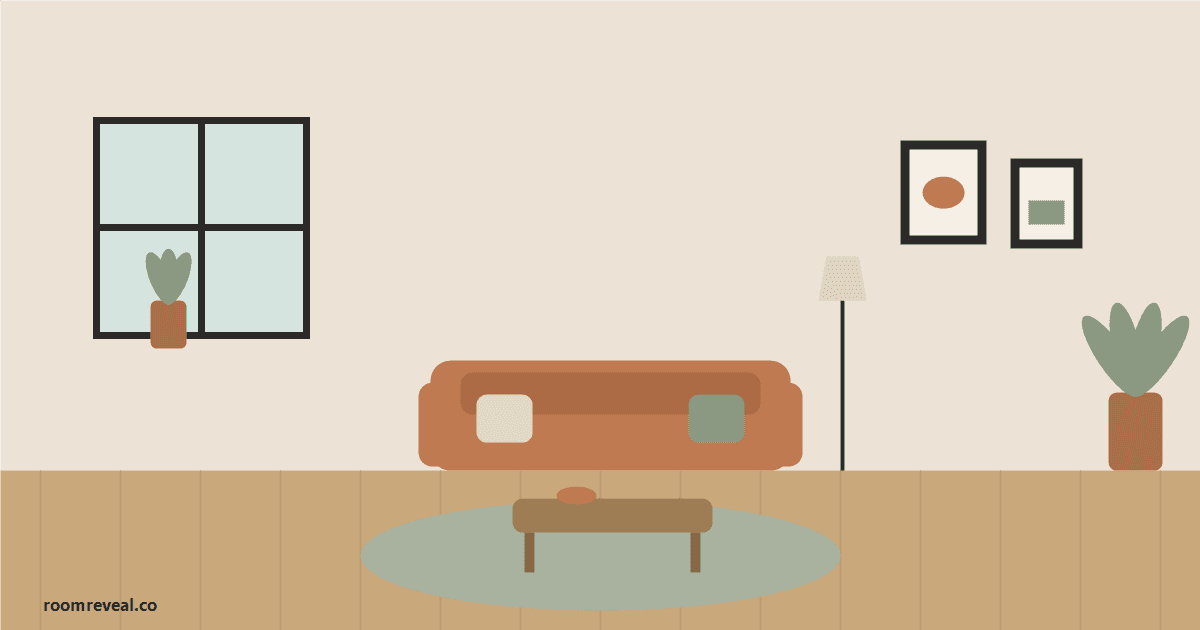
A room that "looks expensive" rarely has the price tag to match. What reads as luxury is almost never the cost of any single object -- it is restraint, scale, cohesion, and a handful of finishing details done right. Designers lean on the same moves whether the budget is enormous or tiny, which is good news: most of what makes a space feel elevated costs little or nothing. Here is how to make a room look expensive without spending a fortune, in roughly the order of impact.
Edit First -- Clutter Is the Cheapest Tell
Nothing makes a room look cheap faster than too much stuff. Visible clutter, mismatched odds and ends, and every surface covered read as chaotic, and chaos reads as inexpensive no matter how nice the individual pieces are. Before you buy a single thing, take everything off the surfaces and put back only what earns its place. Aim for breathing room: empty space around objects is exactly what makes the objects that remain feel deliberate and valuable. Hide the cords, corral the remotes and chargers in a drawer or a lidded box, and clear the floor. An edited room with modest furniture almost always looks more expensive than a crowded room full of nice things.
Commit to a Tight, Cohesive Palette
Expensive-looking rooms are color-disciplined. A common designer formula is a calm base of two or three neutrals, one deeper "anchor" tone, and a single accent used sparingly -- think the 60-30-10 split covered in our guide to choosing a color scheme. Tonal, low-contrast schemes (layers of cream, oatmeal, taupe, and warm white) read as especially luxe because the eye glides instead of bouncing. Whatever you choose, repeat each color at least twice across the room so it feels intentional. The fastest way to make a space look cheap is a jumble of unrelated colors and finishes; the fastest way to elevate it is to pull everything into one restrained, repeated palette.
Go Bigger: Scale Reads as Money
Undersized everything is the most common budget mistake. Small art marooned on a big wall, a too-small rug, dinky table lamps -- all of it whispers "afterthought." Luxury, by contrast, is confident scale. Hang one large piece of art instead of a scatter of small frames. Buy the rug a size up so the front legs of the furniture sit on it. Choose one generous statement object over several little ones. Bigger, fewer, better is the single most reliable way to make an inexpensive room feel high-end, because oversized pieces look custom and considered rather than picked up in a hurry.
Fix the Lighting
A single harsh ceiling fixture is one of the biggest "rental" giveaways there is. Expensive-feeling rooms are lit in layers -- a few table and floor lamps casting warm pools of light at different heights, ideally on dimmers. Two changes punch far above their cost: swap every bulb to a consistent warm white (around 2700K), and add lamps so you can turn the overhead light off entirely at night. If you can upgrade one hardwired fixture, make it a sculptural pendant or a larger chandelier in the dining room or entry -- a single well-chosen light fixture sets the tone for the whole space. Warm, layered, dimmable light flatters everything it touches.
Hang Curtains High and Wide
Window treatments are where a room quietly signals its budget. Curtains hung at the top of the window, ending at the sill, and skimpy in width make ceilings look low and fabric look cheap. The luxe move from our window-treatment guide is to mount the rod high -- near the ceiling, not the window frame -- and extend it well past each side so the panels frame the glass rather than cover it. Use panels long enough to just kiss or pool slightly on the floor, and buy enough width that they look full, not stretched. Floor-to-ceiling drapery instantly makes walls feel taller and the whole room feel grander, often for the price of a longer rod and an extra panel.
Layer Texture Instead of Buying More Stuff
When a palette is restrained, texture is what keeps it from feeling flat -- and rich material variety is a hallmark of expensive rooms. Mix rough with smooth and matte with sheen: a nubby linen sofa, a chunky wool throw, a jute or sisal rug under a smooth side table, a bouclé chair, woven baskets, natural wood, a little metal or glass. Natural materials in particular -- linen, wool, leather, stone, real wood -- read as more luxurious than their synthetic stand-ins. You are adding depth, not clutter, so layer texture into pieces you already need (the rug, the cushions, the throw) rather than buying decorative extras.
Upgrade the Small Details
The cheapest high-leverage trick of all is swapping the details builders and budget furniture get wrong. Replace flimsy cabinet and door hardware with something solid and substantial -- nothing changes a kitchen or dresser's perceived value faster. Fresh paint in a refined color, with crisp trim, costs little and reads as instantly more polished. Other quiet upgrades: real stems or a single large plant instead of dusty faux arrangements, coffee-table books and a tray to organize a surface, matching hangers and hidden storage, and fixing the obviously broken or scuffed. None of these cost much, but together they erase the small "cheap" signals the eye picks up subconsciously.
Add a Few Signs of Life
Sterile and expensive are not the same thing. The most elevated rooms still feel lived-in and personal -- a stack of beautiful books, fresh greenery or a generous plant, a bowl of fruit, art that means something to you. These warm, organic touches keep a pared-back room from looking like a showroom and add the collected-over-time quality that money alone cannot buy. The goal is "curated," not "empty."
Common Mistakes That Make a Room Look Cheap
- Too much, too small. Clutter plus undersized art, rugs, and lamps is the classic budget look. Edit hard, then size up.
- Harsh, single overhead light. One cool-white ceiling fixture flattens everything. Add warm, layered lamp light on dimmers.
- Short, skimpy curtains. Sill-length, narrow panels shrink the room. Hang high and wide, floor-length and full.
- A scattered palette. Many unrelated colors and finishes read as accidental. Commit to a tight, repeated scheme.
- Matchy furniture sets. A whole room bought as one matching suite looks catalog-cheap. Mix pieces so it feels collected.
- Builder-grade leftovers. Flimsy hardware, dusty faux florals, visible cords. Swap, refresh, and hide them.
See the Upgrade Before You Spend
The smartest way to make a room look expensive on a budget is to not waste money on changes that do not land. Upload a photo of your room and test a tighter palette, bigger art, fuller curtains, and layered finishes with Room Reveal to see which moves actually elevate your space before you buy or paint anything. For inspiration on a polished, high-end look, browse modern living room ideas and transitional living room ideas, and pair this with our guides to choosing a color scheme and making a room feel cozy.
Ready to transform your room?
Upload a photo and see it redesigned in any of our 12 styles.
Try Room RevealLooking for inspiration? Browse style-by-room ideas with tips, palettes, and looks to try in your own space.
Explore room ideas