How to Stage a House to Sell Faster: A Whole-Home Checklist
A room-by-room guide to staging your whole house to sell faster -- the order to work in, what matters most in every room, and the low-cost moves that lift your offer.
Room Reveal Team
June 24, 2026
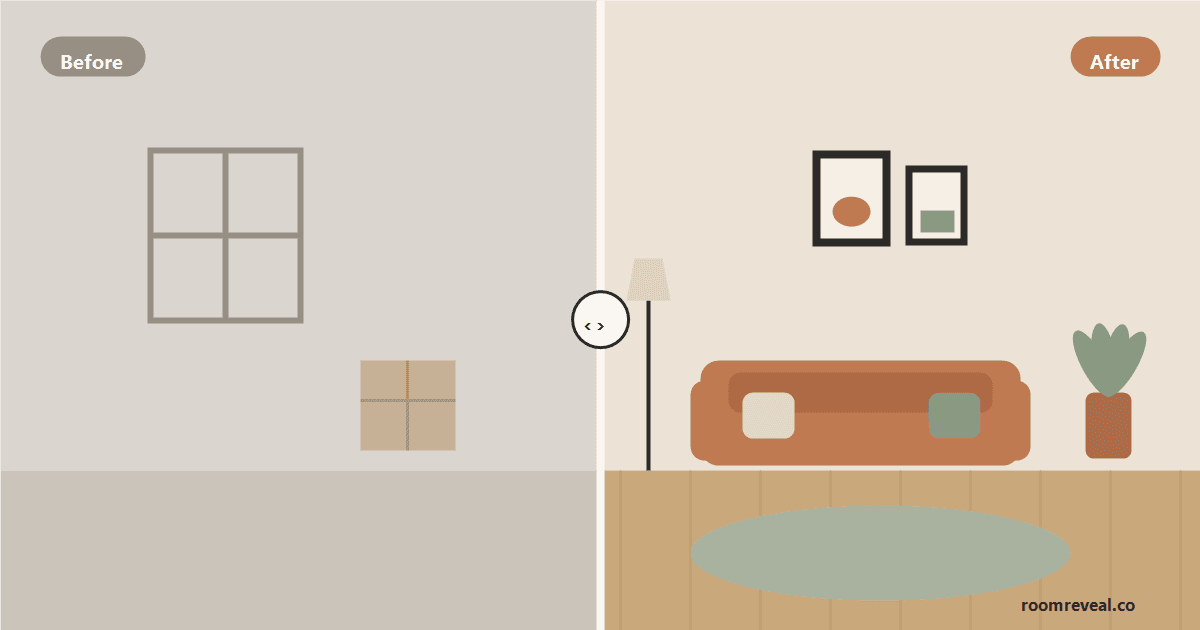
Staging a single room is straightforward. Staging a whole house is a different challenge -- not because any one room is harder, but because a home sells as a sequence. Buyers don't grade rooms in isolation; they accumulate an impression as they walk through, and a great living room can't undo the doubt planted by a cluttered entry or a grimy bathroom two rooms earlier. The whole house has to tell one consistent story: clean, bright, spacious, and move-in ready.
The encouraging part is that whole-home staging is mostly about order and consistency, not money. You don't need to stage every room to the same intensity, and you almost never need a renovation. You need a plan that spends your effort where buyers look hardest, keeps the experience seamless from the curb to the back bedroom, and never lets a single neglected space break the spell. This guide is that plan -- a room-by-room checklist for staging an entire home to sell faster and closer to asking.
Why Staging the Whole Home Pays Off
Buyers form a price expectation in the first sixty seconds and then spend the rest of the tour confirming or contradicting it. Every room either reinforces "this home is worth it" or quietly chips away at the number they had in mind. A house staged consistently keeps that confidence climbing; one with two or three weak rooms gives buyers permission to start subtracting -- from their emotional investment first, and then from their offer.
Consistency is the real goal. A buyer who sees a beautifully staged living room and then a chaotic home office doesn't average the two -- they remember the chaos, because it reads as the "real" state of the house behind the staging. Whole-home staging is the discipline of making sure there's no weak link for that suspicion to latch onto.
Step 1: Declutter and Deep Clean the Entire House First
Before you style a single room, run one sweep across the whole house. This is the highest-return work in the entire process, it costs almost nothing, and doing it all at once keeps the house consistent rather than patchy.
- Pre-pack a third of your belongings. You're moving anyway, so box up the excess now -- surplus furniture, off-season clothes, the contents of crowded shelves. Emptier rooms and closets read as larger and better-storaged. Rent a unit or stack labeled boxes neatly in the garage.
- Depersonalize everywhere at once. Family photos, fridge magnets, kids' artwork, monogrammed anything -- collect it room by room in a single pass so the whole house reads as a blank, aspirational canvas, not someone else's life.
- Deep clean top to bottom. Wash every window inside and out (nothing brightens a house more), steam carpets, mop and degrease, scrub grout, dust baseboards and fans, and wipe every switch plate. "Clean" is the cheapest luxury signal there is, and buyers extend the trust to the parts of the house they can't inspect.
- Hunt down odors. Pets, cooking, damp, and smoke are invisible in photos but decisive in person. Air the house out, wash soft furnishings, and skip heavy artificial fragrance -- buyers read a strong scent as something being covered up.
Do this whole-house pass first and every room you stage afterward starts from a clean, pared-back base, so the styling does more with less.
Step 2: Win the First Impression -- Curb Appeal and Entry
The sale starts before the front door opens. The exterior and entry set the buyer's mood for everything that follows, so they deserve outsized attention. Outside: mow and edge the lawn, trim overgrowth, clear the walkway, add a couple of simple potted plants, and make the front door itself look cared-for -- a fresh coat of paint and clean hardware go a long way. Inside the door, the entry is the handshake: clear it of shoes, coats, and clutter, add a mirror or a single piece of art, and make sure the very first thing a buyer sees is open, bright, and welcoming rather than a pile of daily life.
Step 3: Stage the Rooms That Sell -- in Priority Order
Not every room carries equal weight. Concentrate your time and budget on the three rooms that drive offers, and stage each to the standard buyers expect. Each of these has its own deep-dive playbook:
- The living room. Usually the first room buyers enter and the one they picture hosting in. Float the furniture off the walls around a clear focal point, keep the palette light and neutral, and let the space feel open. See the full guide to staging a living room.
- The kitchen. The single biggest swing factor in whether a home feels move-in ready. Clear the counters to near-bare, deep-clean until it shines, and refresh cheap details like hardware and lighting rather than renovating. See the full guide to staging a kitchen.
- The primary bedroom. Buyers buy the rest and retreat the room promises. Dress the bed like a boutique hotel in crisp white layers, depersonalize completely, and keep walkways clear on both sides. See the full guide to staging a bedroom.
If your budget or energy is limited, these three rooms are where it should go. A home where the living room, kitchen, and primary suite all land is most of the way to a confident offer.
Step 4: Don't Let the "Minor" Rooms Break the Spell
The secondary rooms won't win the sale on their own, but any one of them can lose it. A buyer riding high on a gorgeous kitchen and then opening a grimy bathroom feels the whole impression deflate. These rooms only need to read as clean, clear, and purposeful -- not magazine-perfect.
- Bathrooms. The non-negotiable here is spotless. Clear the counters, hang fresh white towels, add a small plant, re-caulk anything tired, and make the mirror and fixtures gleam. Buyers forgive a dated bathroom far more readily than a dirty one.
- Dining room. Keep it simple and unmistakably a dining room -- a clean table, a centered light fixture, and a restrained centerpiece. Resist over-setting the table; a couple of place settings suggest the use without clutter.
- Home office. With remote work a top buyer priority, a tidy, functional workspace is a selling point. If a spare corner or bedroom can read as an office, stage it as one -- clear desk, one chair, cables hidden.
- Secondary bedrooms. Never leave them empty; a bare room leaves buyers guessing whether a real bed fits. Give each a single clear identity -- guest room, child's room, or office -- and keep the styling as light and neutral as the primary suite.
Step 5: Create Consistency, Flow, and Light Throughout
What ties a whole staged home together is the connective tissue between rooms. Keep a light, cohesive palette running through the public spaces so the house flows rather than lurching from one mood to the next. Clear every hallway, landing, and walking path so buyers move through without weaving -- a clear path reads as a spacious home. Open every window treatment, turn on every light for showings and photos, and match all your bulbs to one warm-white temperature (around 2700K-3000K) so the lighting feels intentional from room to room instead of patchy. The aim is a buyer who glides through the house without a single jarring note.
See the Whole Home Before You Invest
Whole-home staging raises a hard question that single rooms don't: with several spaces competing for a limited budget, where is your money and effort actually worth it? Is it worth painting the kitchen cabinets, or just swapping the hardware? Will a warmer palette lift the dim living room, or is the layout the problem? Guessing wrong across an entire house gets expensive fast -- you can over-invest in a room the market won't reward, or under-invest and watch the listing stall.
This is where digital visualization earns its place in a whole-home workflow. Before committing to paint, furniture rental, or a weekend of work, you can take a photo of each room you actually have and see a credible, photo-realistic version of it staged -- a fresh palette, a different layout, painted cabinets, a furnished version of an empty room -- and react to a real image instead of guessing. Used across a house, it's a fast way to decide which rooms genuinely need investment and which just need cleaning and editing, so your budget lands where it moves the needle. The honest framing: it's a planning and presentation tool that de-risks where you spend, not a substitute for the real cleaning, decluttering, and repairs a sale still requires -- and not a way to misrepresent a home, only to plan and preview it.
A Whole-Home Staging Checklist
- One whole-house pass first: pre-pack a third of your things, depersonalize, deep clean, kill odors
- Curb appeal and entry handled before anything inside -- they set the mood for the tour
- Living room, kitchen, and primary bedroom staged to standard (their deep-dive guides linked above)
- Every bathroom spotless; dining room, office, and secondary bedrooms clean and clearly purposeful
- A light, cohesive palette and clear walking paths connecting the rooms
- All window treatments open, every light on, bulbs matched warm-white
- Visualize each room's potential first, so your budget lands where it actually pays off
Stage a whole house this way -- one clean sweep, a sharp focus on the three rooms that sell, and no weak link to break the spell -- and buyers move through it gathering confidence instead of doubts. In a market where the decision happens in seconds and the offer follows the feeling, that seamless, move-in-ready impression is worth far more than the modest cost of getting every room right.
Want palette and layout ideas as you stage? Browse broadly appealing, move-in-ready inspiration like transitional living room ideas or modern bedroom ideas -- both lean on the light, neutral, universally liked looks that help a home sell.
Want to see each room's potential before you spend a dollar staging it? Try Room Reveal to visualize any room in your home in seconds and decide exactly where your staging budget belongs.
Ready to transform your room?
Upload a photo and see it redesigned in any of our 12 styles.
Try Room RevealLooking for inspiration? Browse style-by-room ideas with tips, palettes, and looks to try in your own space.
Explore room ideas