How to Stage a Living Room to Sell Faster
The living room is the first room most buyers picture themselves living in. Here's a practical, room-by-room playbook for staging it to sell faster -- and for more.
Room Reveal Team
June 23, 2026
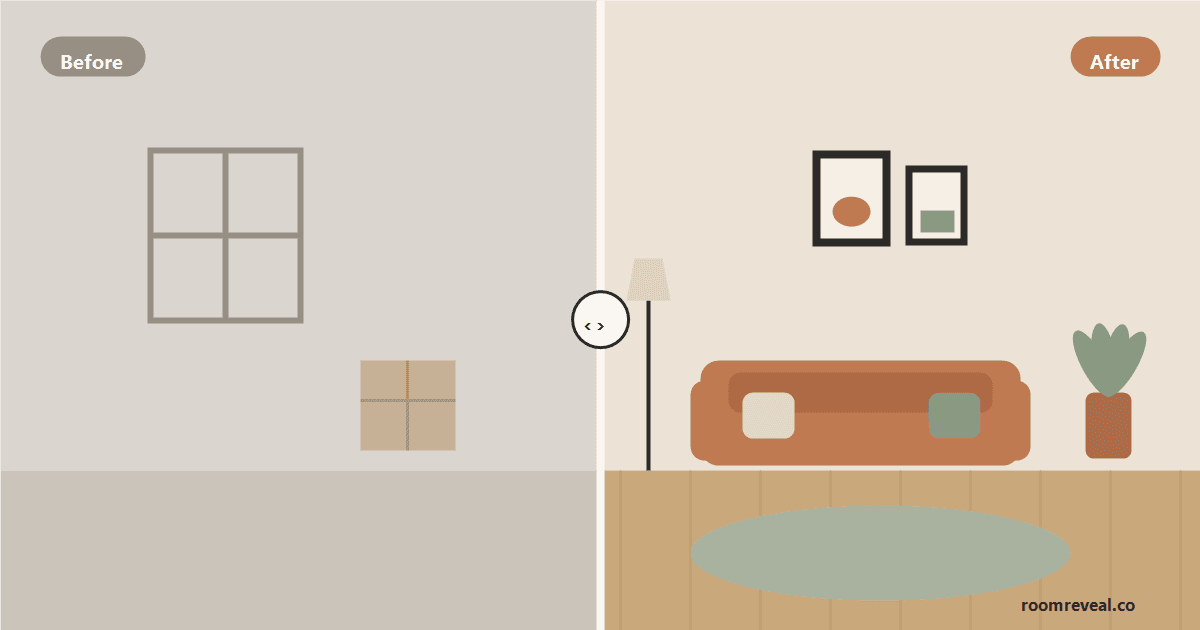
The living room does more selling than any other room in the house. It's usually the first space buyers walk into, it's the room they imagine hosting in, and it's the photo that makes them click your listing in the first place. Get it right and the rest of the showing rides the momentum. Get it wrong and buyers spend the tour quietly subtracting from their offer.
The good news: staging a living room to sell is mostly a series of small, repeatable decisions, not an expensive renovation. This guide walks through the whole process -- from the declutter pass to the final photo -- so you can present a living room that helps a home sell faster and closer to asking.
Why the Living Room Carries the Sale
Buyers don't evaluate a living room the way they live in one. They scan it in seconds and form a gut judgment: does this feel spacious, bright, and cared-for, or cramped, dark, and tired? Staging is simply the practice of steering that snap judgment in your favor. The goal isn't to decorate to your taste -- it's to help the largest possible number of buyers picture their life in the space.
That single idea drives every decision below. Anything that says "this is someone else's home" works against you. Anything that reads as "move-in ready, bright, and roomy" works for you.
Step 1: Declutter and Depersonalize
This is the highest-return step and it costs nothing. Aim to remove roughly a third to half of what's currently in the room. A space that feels full to you reads as small to a buyer.
- Clear the surfaces. Coffee tables, side tables, and shelves should hold a handful of intentional objects, not a collection. Three items on a coffee table; a few books and one or two pieces on a shelf.
- Remove the personal. Family photos, kids' artwork, trophies, and anything monogrammed pull the buyer out of their daydream and into yours. Box them up.
- Thin the furniture. Extra armchairs, a second bookcase, an oversized ottoman -- if a piece blocks a walking path or hides the floor, store it. Empty floor reads as square footage.
- Edit the bookshelf. Pull off anything mismatched, turn a few stacks horizontal, and leave breathing room between groupings.
A useful rule: if you'd be embarrassed to leave it in a hotel room, it doesn't belong in a staged living room.
Step 2: Deep Clean Until It Photographs as New
Cleanliness is the cheapest luxury signal there is. Buyers equate "clean" with "well-maintained," and they extend that trust to the parts of the house they can't see. Wash the windows inside and out -- this alone can transform how bright a room photographs. Steam the carpets or mop the floors, dust the baseboards and ceiling fan, wipe down switch plates, and clean any glass or mirrored surfaces until they're streak-free.
Step 3: Maximize Light and Space
Light and perceived space are the two things buyers respond to most, and they reinforce each other.
- Open everything. Pull the curtains back, lift the blinds, and let the windows do their job. Take down heavy or dated drapery if it's blocking light -- a bare window beats a dark one.
- Match your bulbs. Replace mismatched bulbs with a single warm-white temperature (around 2700K-3000K) across the room so the lighting reads as cohesive, not patchy. Turn on every lamp for showings and photos.
- Add a mirror. A single large mirror placed to reflect a window bounces daylight deeper into the room and instantly makes it feel larger.
- Float the furniture. Pulling sofas and chairs a few inches off the walls and angling them toward a focal point makes a room feel more intentional and, counterintuitively, larger.
Step 4: Define the Function and the Focal Point
Buyers need to instantly understand what the room is for. A living room should read as a comfortable place to sit and talk or watch something -- so make that obvious.
Anchor the seating around a clear focal point: a fireplace, a feature window, or a TV wall. Arrange the main pieces into a conversational grouping with a rug underneath to tie them together. The rug matters more than people expect -- a properly sized rug (front legs of the furniture on it, at minimum) defines the zone and makes the whole arrangement look deliberate. If the room is awkwardly shaped or open-plan, use the furniture grouping to carve out a clear "living" zone so buyers aren't left guessing.
Step 5: Style with Neutral, Universal Appeal
Staging décor should be tasteful and forgettable -- present enough to feel warm, neutral enough to never distract. Lean on a light, broadly appealing palette and let texture rather than bold color do the work.
- Soften with textiles. A couple of throw pillows and one folded throw add warmth without clutter. Keep colors muted -- creams, soft greens, warm greys.
- Add one plant. A single healthy plant or a simple stem arrangement signals life and care. Skip anything fussy or fake-looking.
- Hang art at eye level. One larger piece beats a scattering of small frames. Abstract or landscape art is safest -- it's pleasant and impersonal.
- Choose broadly liked styles. For the widest buyer pool, transitional and warm modern read as "move-in ready" to almost everyone. Save bolder looks for markets that reward them.
Step 6: Stage for the Camera, Not Just the Room
Most buyers see the living room online before they ever stand in it, so the listing photo is the real first impression. Shoot in daylight with all the lamps on, from a corner at roughly chest height to capture the most floor and depth. Take a few angles and pick the one that makes the room feel largest and brightest. If the photo doesn't make you want to sit down, keep adjusting before the shoot.
The Empty-Room Problem -- and How Visualization Helps
Empty living rooms are the hardest to sell. Without furniture, buyers can't gauge scale, can't picture a layout, and tend to fixate on every flaw in the bare walls and floor. Physical staging solves this but is expensive and slow, and it locks you into a single look.
This is where digital visualization earns its keep. Before you spend a cent on rented furniture, you can see a credible, photo-realistic version of the staged room -- test a layout, compare a warm-modern look against a transitional one, and decide what's worth investing in. It's also invaluable for vacant listings: you can show buyers the room's potential without hauling in a single sofa. Treat it as a planning and presentation tool that takes the guesswork out of staging, not a replacement for a clean, well-prepared space.
A Quick Pre-Listing Checklist
- Removed a third to half of the clutter and all personal items
- Windows, floors, and surfaces deep-cleaned
- Curtains open, bulbs matched, every lamp working
- Furniture floated and grouped around a clear focal point
- Rug sized correctly under the seating
- Neutral textiles, one plant, eye-level art
- Listing photo taken in daylight, from a corner, with lamps on
Work through that list and your living room will photograph brighter, feel larger, and give buyers exactly what they're looking for: a space they can immediately imagine as their own.
Want to plan the look before you move a single piece of furniture? Try Room Reveal to visualize your staged living room in seconds and find the layout that sells.
Ready to transform your room?
Upload a photo and see it redesigned in any of our 12 styles.
Try Room RevealLooking for inspiration? Browse style-by-room ideas with tips, palettes, and looks to try in your own space.
Explore room ideas