How to Stage a Bedroom to Sell Faster
Bedrooms sell the lifestyle, not the square footage. Here's a calm, practical playbook for staging the primary suite and secondary bedrooms so buyers picture rest, not your laundry pile.
Room Reveal Team
June 23, 2026
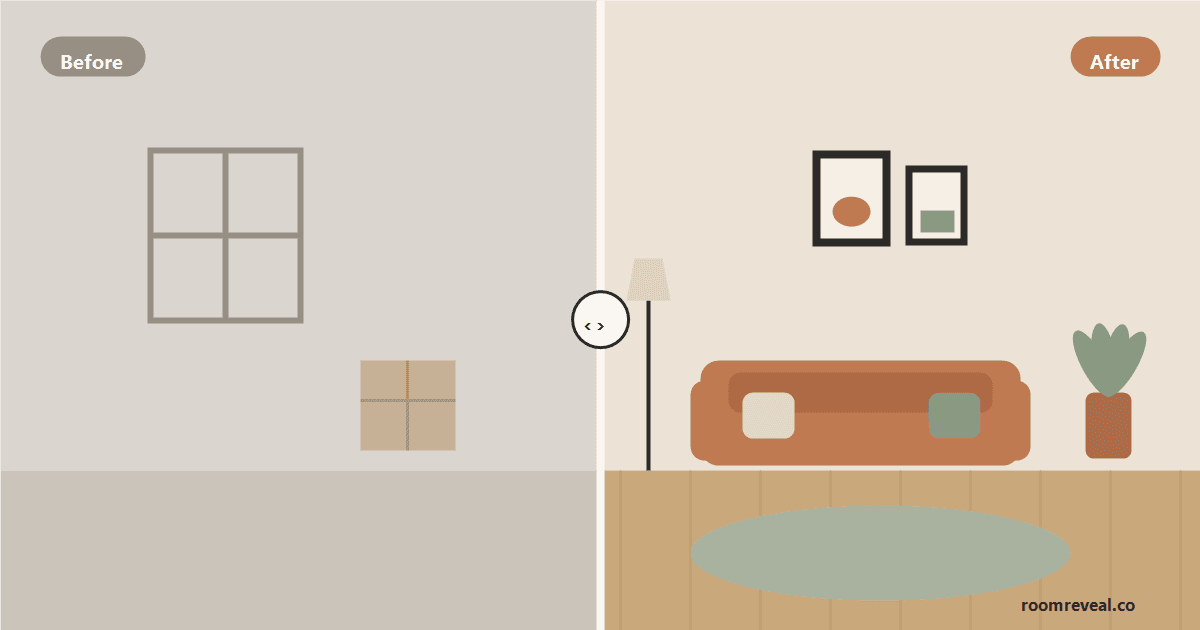
If the living room sells the home, the bedroom sells the life in it. Buyers walk into a primary suite imagining the one room in the house that's entirely theirs -- the place they'll wake up, wind down, and escape to. A bedroom that reads as calm, restful, and roomy quietly raises a buyer's emotional ceiling for the whole property. One that reads as cramped, personal, or chaotic does the opposite, no matter how good the kitchen was.
The encouraging part: bedrooms are among the easiest rooms to stage well, because the formula is simple and forgiving. This guide walks through staging the primary bedroom and the secondary bedrooms, with the small decisions that make a room photograph larger, brighter, and more inviting.
What Buyers Are Actually Judging
In a bedroom, buyers are unconsciously scoring three things: is it restful, is it spacious, and is it theirs to imagine. Everything below serves one of those three. A staged bedroom isn't decorated to impress -- it's neutralized and softened until the widest possible range of buyers can picture their own life unfolding in it.
That reframing matters most here, because the bedroom is the most personal room in the house and therefore the easiest to over-personalize. Your job is to gently erase yourself from it.
Step 1: Depersonalize Completely
The bedroom collects more personal residue than any other room, and buyers notice all of it. Work through this pass first:
- Remove personal photos and keepsakes. Wedding portraits, kids' artwork, and anything monogrammed pull buyers out of their daydream and into your life.
- Clear the nightstands. A lamp, a small stack of books, and maybe one object. Hide chargers, medications, remotes, water glasses, and reading glasses.
- Empty the visible clutter. Laundry, exercise equipment, the chair that's become a clothes rack -- all of it goes. A treadmill in the corner tells buyers the room is too small to be just a bedroom.
- Thin the closet. Buyers will open the closet, and a half-full closet reads as generous storage. Pack away off-season clothes and leave space between hangers.
Step 2: Make the Bed the Hero
The bed is the single most important element in the room, and dressing it well is the highest-return move in bedroom staging. Aim for the crisp, layered look of a boutique hotel:
- Start with white or soft neutral bedding. Clean white linens read as fresh, luxurious, and universally appealing. They also photograph beautifully against almost any wall color.
- Layer for depth. A fitted sheet, a flat sheet, a duvet or comforter, then a folded throw across the foot and two to four pillows. Layers signal comfort and make the bed look fuller and more expensive.
- Iron or steam the linens. Wrinkled bedding undoes everything. Smooth, taut bedding is the difference between "hotel" and "guest room nobody uses."
- Scale the bed to the room. An oversized bed in a modest room makes it feel tiny. If the bed crowds the walkways, a smaller frame will make the whole space read larger.
Step 3: Maximize Light and Air
Bedrooms are often the darkest rooms in a home, and darkness reads as small. Fight for every bit of light:
- Open the window treatments. Pull curtains fully back and lift blinds. Swap heavy or dated drapery for light, simple panels that frame the window without blocking it.
- Match your bulbs. Use a single warm-white temperature (around 2700K-3000K) across the lamps and overhead so the light reads as cohesive and inviting, not patchy.
- Add a mirror. A mirror positioned to catch the window bounces daylight around and visually doubles the sense of space.
- Air it out. Smell is invisible in photos but decisive in person. Open windows before showings, wash all linens, and skip heavy artificial fragrances -- clean and neutral beats floral.
Step 4: Arrange for Flow and Scale
Buyers gauge a bedroom's size by how easily they can move through it. Float the bed against the main wall, ideally the one you see first from the doorway, and leave clear walking space on both sides. Resist cramming in extra furniture: a bed, two nightstands, and one accent piece -- a bench at the foot or a single reading chair in a corner -- is plenty. If a dresser blocks a path or a second wardrobe eats the floor, store it. Visible floor is perceived space.
Define the room's purpose clearly, too. A bedroom should read unmistakably as a place to sleep and relax. If a corner is doing double duty as an office or nursery, stage it as a calm, intentional zone rather than leaving it ambiguous -- buyers reward rooms they instantly understand.
Step 5: Style with Restraint
Bedroom décor should whisper. The goal is warmth without personality that competes with the buyer's imagination.
- Keep art calm and impersonal. One larger piece above the bed -- a soft landscape or gentle abstract -- beats a scattering of small personal frames.
- Add one plant or stem arrangement. A single healthy plant signals life and care without clutter.
- Layer texture, not color. A woven throw, a textured rug under the foot of the bed, linen pillows -- let texture do the warming so the palette stays broadly appealing.
- Anchor with a rug. A rug that slides partway under the bed and extends past its sides grounds the room and adds a layer of softness underfoot.
Staging Secondary Bedrooms
Don't leave the spare rooms empty -- a vacant bedroom leaves buyers guessing whether a real bed even fits. Give each one a single, clear identity: a guest room with a made bed and two nightstands, a child's room kept gender-neutral, or a tidy home office if the layout suits it. Pick the use that shows the room at its most flexible and desirable, and keep the styling as light and neutral as the primary suite.
The Empty-Room Problem -- and How Visualization Helps
Empty bedrooms are deceptively hard to sell. Without a bed for scale, buyers can't tell a generous room from a tight one, and they tend to read bare walls and floors as flaws rather than potential. Physical staging solves this but is expensive, slow, and locks you into one look across every bedroom in the house.
This is where digital visualization earns its place in the workflow. Before renting a stick of furniture, you can see a credible, photo-realistic version of a staged bedroom -- test whether a queen or a king suits the space, compare a serene neutral scheme against a warmer one, and decide what's actually worth investing in. For vacant listings, it lets you show buyers a furnished, restful room without hauling anything upstairs. Think of it as a planning and presentation tool that removes the guesswork, not a substitute for clean linens and an aired-out room.
A Quick Pre-Listing Checklist
- All personal photos, keepsakes, and clutter removed
- Nightstands cleared to a lamp, a book, and one object
- Closet thinned to read as generous storage
- Bed dressed in crisp white linens, layered, and steamed
- Curtains open, bulbs matched, room aired out
- Bed floated with clear walkways on both sides
- One calm artwork, one plant, a grounding rug
- Secondary bedrooms each given a single clear purpose
Work through that list and the bedroom will photograph brighter and larger, and feel like the calm retreat buyers are hoping to find. In a market where buyers decide in seconds, that restful first impression is worth far more than the cost of a fresh set of sheets.
Want to plan the look before you move a single piece of furniture? Try Room Reveal to visualize your staged bedroom in seconds and find the setup that helps it sell.
Ready to transform your room?
Upload a photo and see it redesigned in any of our 12 styles.
Try Room RevealLooking for inspiration? Browse style-by-room ideas with tips, palettes, and looks to try in your own space.
Explore room ideas