How to Decorate a Living Room: A Step-by-Step Plan From Scratch
How to decorate a living room step by step: start with function and a focal point, anchor the big pieces, layer lighting and texture, dress the walls, then style it so the room feels finished.
Room Reveal Team
June 28, 2026
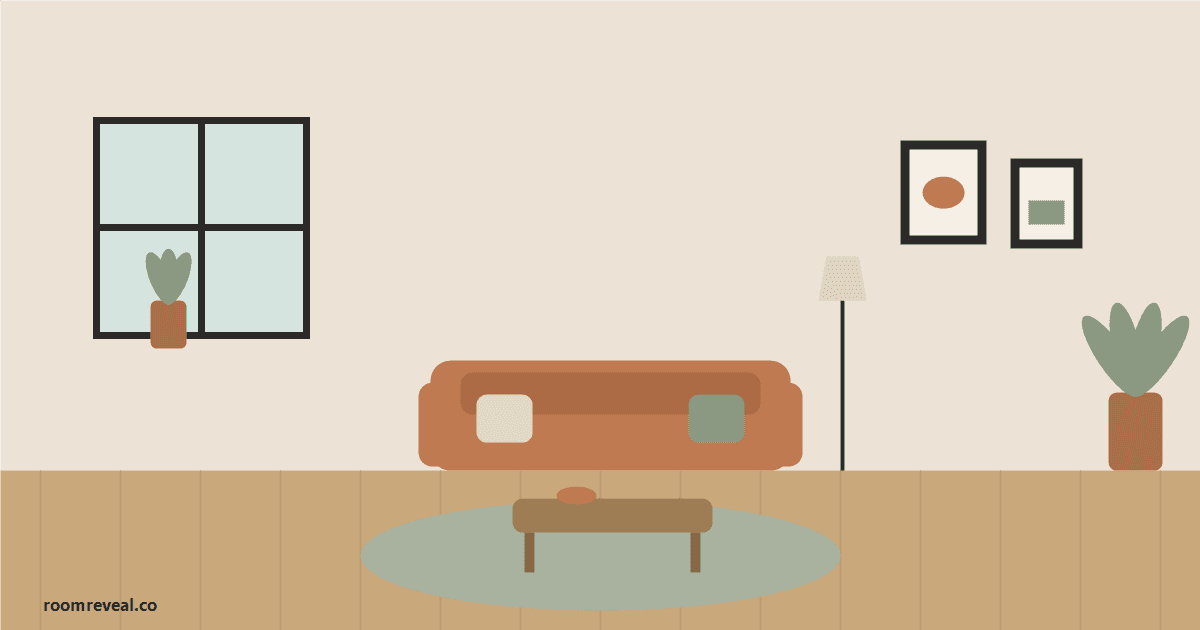
The living room is the hardest room to decorate because it has to do the most: it's where you relax, host, watch, read, and often eat or work too. Faced with an empty or half-finished space, most people start by buying a sofa and hoping the rest falls into place -- and then wonder why the room never quite feels pulled together. The fix is to decorate in the right order, from the bones outward, so each decision narrows the next. Here's a step-by-step plan that works in any size living room and any style, whether you're starting from an empty floor or rescuing a room that just feels "off."
1. Start With How the Room Needs to Function
Before you think about a single color or piece of furniture, decide what actually happens in this room. Is it a TV-first family room, a conversation-and-reading room, an entertaining space, or all of the above? Does it need to seat two people or eight? Does anyone work in here? Naming the room's real jobs tells you how much seating you need, whether the layout points at a screen or inward toward conversation, and how much storage you have to plan for. A beautiful room that doesn't fit your life gets rearranged within a month. Sketch the room's dimensions, note the doors, windows, outlets, and the wall the TV (if any) will live on -- those fixed points decide everything downstream.
2. Anchor the Layout Around a Focal Point
Every well-designed living room has a focal point -- the thing your eye lands on first -- and the furniture is arranged in relationship to it. It might be a fireplace, a big window with a view, or the TV; in a room with none of those, you create one with a large piece of art or a statement sofa. Point your main seating at that focal point and pull the pieces into a conversation group, close enough that people can talk without raising their voices (a coffee table within easy reach of every seat is the test). Float the furniture off the walls if the room is big enough -- pushing everything to the perimeter is the most common reason a living room feels like a waiting room. Our guide to arranging furniture in any room walks through traffic flow and spacing in detail.
3. Choose a Palette Before You Buy Anything
Decide your colors before you start acquiring, or you'll end up with a roomful of pieces that don't talk to each other. Pick a tight palette -- a neutral foundation for the big-ticket items (sofa, rug, walls), one or two main colors, and an accent for the small stuff you can swap cheaply. A reliable starting ratio is roughly 60% dominant neutral, 30% secondary color, 10% accent. Keeping the expensive, hard-to-change pieces neutral and putting your color into pillows, throws, and art means you can restyle the room in a few years without replacing the furniture. For the full method, see how to choose a color scheme for your home.
4. Get the Big Pieces Right First -- Sofa and Rug
Spend your attention and budget on the two pieces that set the scale of the whole room: the sofa and the area rug. Size the sofa to the room and the wall it sits on -- too small and it floats, too big and it swallows the space -- and prioritize comfort and a frame that will last, since this is the piece everyone touches. Then get the rug big enough: the single most common decorating mistake is a rug that's too small, which makes everything around it look like it's shrinking. As a rule, the front legs of all the main seating should sit on the rug, tying the group together. Our guides to choosing a sofa and what size rug for any room cover the specifics; only after these are settled should you add the coffee table, side tables, and a media console or storage.
5. Layer Your Lighting
A living room lit by a single overhead fixture (or worse, just the ceiling can lights) always feels flat and unwelcoming at night. You want three layers: ambient light for overall glow, task light for reading and activities, and accent light to highlight art or add warmth. In practice that means a mix of a few table and floor lamps placed around the seating, not one bright source -- aim for lamps in at least three spots so the light wraps the room. Use warm bulbs (2700K) and put the main lights on dimmers so the room can shift from bright-and-functional by day to low-and-cozy at night. Layered, warm light is the cheapest move with the biggest payoff; see how to layer lighting in any room.
6. Add Texture, Pattern, and Softness
With the structure in place, the room still needs the soft layers that make it feel lived-in rather than furnished. Mix materials so the eye has something to read -- a chunky knit throw, linen and velvet pillows, a woven basket, a wood or stone surface, a leather chair -- and let rough play against smooth, matte against shine. Bring in pattern through pillows and a throw, keeping a shared color thread so it reads collected, not chaotic. This layer is also where the room gets cozy and personal, and it's the easiest to change seasonally. See how to add texture to a room and, for arranging the pillows themselves, how to style a sofa.
7. Dress the Walls
Blank walls are what make a living room feel unfinished long after the furniture is in. The wall above the sofa is the prime spot: hang art (or a gallery arrangement) at eye level, sized to about two-thirds the width of the sofa, with the bottom edge a comfortable hand's width above the back. Don't forget the other walls, a large mirror to bounce light, or floating shelves for display. The mistake here is hanging things too small and too high -- art should relate to the furniture below it, not drift near the ceiling. Our guides to choosing and hanging art and creating a gallery wall cover scale and placement.
8. Finish With Styling and Signs of Life
The last 10% is what separates a furnished room from a designed one. Style the coffee table with a small tray, a stack of books, and something organic; add a plant or two for life and color; layer in a few personal objects so the room reads as yours. Work in odd numbers, vary the heights, and leave breathing room -- a styled surface needs empty space as much as objects. Then stop before it gets cluttered. For the finishing touches, see how to style a coffee table and how to decorate with plants.
Common Living-Room Mistakes
- Furniture pushed against the walls. It makes the room feel like a waiting area. Pull seating into a conversation group around the focal point.
- A rug that's too small. The number-one scale error. Go bigger -- the main seating's front legs should sit on it.
- One overhead light. Flat and cold at night. Add table and floor lamps in at least three spots, on dimmers, with warm bulbs.
- Buying piecemeal with no plan. A palette and a layout decided up front keep everything coordinated and stop costly mismatches.
- Bare walls. Empty walls read unfinished. Hang art at eye level, scaled to the furniture below.
- No soft layers. All hard furniture and no textiles feels like a showroom. Add throws, pillows, and texture.
See Your Living Room Before You Commit
Because the living room's big pieces are expensive and hard to return, it pays to see a layout, palette, or style on your actual room before you buy. Upload a photo of your space and preview different living-room looks, colors, and furnishings against your real walls and windows with Room Reveal. For inspiration, browse modern living room ideas and scandinavian living room ideas, and pair this with our guides to arranging furniture in any room, choosing a color scheme, and what size rug for any room.
Ready to transform your room?
Upload a photo and see it redesigned in any of our 12 styles.
Try Room RevealLooking for inspiration? Browse style-by-room ideas with tips, palettes, and looks to try in your own space.
Explore room ideas