How to Style a Sofa: Arrange Throw Pillows and Blankets Like a Designer
How to style a sofa: the throw-pillow formula and odd-number rule, getting pillow sizes and inserts right, draping a throw blanket, mixing patterns without clashing, and the mistakes that make a couch look flat -- so your sofa looks pulled together and stays comfortable to actually sit on.
Room Reveal Team
June 27, 2026
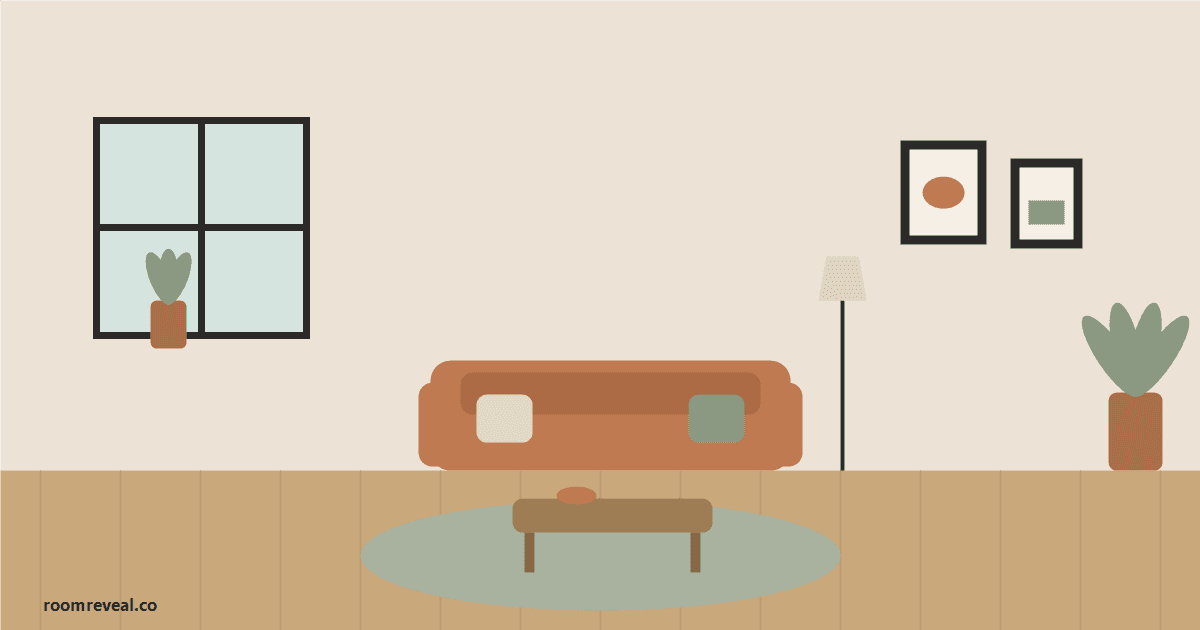
The sofa is usually the largest piece of furniture in a living room and the one everyone's eye lands on first, so how it's dressed sets the tone for the whole space. A bare couch with two limp, matching pillows looks unfinished; a thoughtfully styled one makes the room feel layered, inviting, and intentional. The good news is that styling a sofa is almost entirely about a few repeatable moves -- pillow count, size, texture, and one well-draped throw -- none of which require expensive pillows or a designer's eye. Here is how to style a sofa so it looks pulled together and is still genuinely comfortable to sink into.
Start With the Right Number of Pillows
Most sofas look best with an odd number of throw pillows -- typically five on a standard three-seat sofa, three on a loveseat or smaller settee, and up to seven on a large sectional. Odd numbers let you build asymmetry and a sense of casual fullness; even, perfectly matched pairs can look stiff and showroom-flat. The classic arrangement is a pair of larger pillows in the back corners, a second pair in a different fabric layered just in front, and a single accent pillow -- a lumbar or a smaller square in a punchier pattern -- set off-center to break the symmetry. On a deep sectional, anchor the corner where the two sections meet and let the count taper out along each arm. The point is enough pillows to read as layered, but not so many that anyone sitting down has to relocate a pile to the floor.
Get the Pillow Sizes and Inserts Right
Scale is what separates a styled sofa from a sad one, and the most common mistake is pillows that are too small. Start your back layer larger than you think -- 22 or 24 inch covers read as generous and substantial against a full-size sofa, where 18 inch pillows can look skimpy. Then step down: layer 20 inch squares in front of the 22s, and finish with an 18 inch square or a lumbar (typically 14 by 22) at the front. That graduated sizing gives the arrangement depth instead of a flat row. Just as important is the insert: buy inserts one size larger than the cover (a 24 inch insert in a 22 inch cover) and choose feather-down or a feather-down blend so the pillow has body and can be karate-chopped or left to slouch naturally. A poly insert sized exactly to the cover is the number-one reason pillows look cheap and limp.
Mix Patterns and Textures Without Clashing
A sofa that looks designed almost always mixes pillow fabrics rather than matching them all. A reliable recipe is to combine three kinds of fabric: one larger-scale pattern (a floral, an abstract, a bold geometric), one smaller-scale or simpler pattern (a stripe, a check, a subtle dot), and one solid or heavily textured pillow (a chunky knit, a boucle, a velvet, a linen) to give the eye a place to rest. Tie them together with a shared color thread -- pull one or two hues that already appear elsewhere in the room so the pillows feel connected rather than random. Varying texture matters as much as varying pattern: a smooth velvet next to a nubby knit next to a crisp linen creates the layered, tactile look designers prize. Our guide to adding texture to a room explains why that rough-smooth, matte-sheen contrast does so much heavy lifting.
Drape a Throw Blanket the Right Way
A throw blanket is the single fastest way to make a sofa look finished and cozy, but how you place it matters. The two reliable methods are the casual drape -- folded loosely in thirds lengthwise and laid over one arm or the back corner of the sofa, with a little allowed to puddle -- and the folded band, a neater rectangle laid across the seat or over the back for a more tailored look. Either way, let it look relaxed rather than perfectly squared; a slightly tossed throw reads as lived-in and inviting. Choose a throw with real texture and a bit of weight -- a chunky knit, a fringed wool, a waffle cotton -- and in a color that either echoes an accent pillow or quietly extends the room's palette. The throw also covers the transition where the seat meets the arm and adds that final layer that makes the whole sofa feel complete, the same way it warms up any room you want to feel cozy.
Style the Sofa as Part of the Whole Vignette
A sofa never sits in isolation -- it works with the coffee table in front of it, the wall behind it, and the rug under it, and styling all of them together is what makes the seating area feel composed. Make sure the pillow colors talk to the coffee-table styling and the art above; a thread of repeated color across the sofa, the table, and the wall is what unifies the zone. Keep the throw and pillow palette in conversation with the rug so the floor and the sofa do not read as two unrelated schemes. And mind the scale of everything together: a low, modern sofa wants a lower-profile arrangement, while a deep traditional one can carry taller, fuller stacks. Once the sofa is dressed, our guide to styling a coffee table finishes the most-looked-at surface in the room.
Keep It Comfortable and Realistic
The most beautiful sofa is pointless if no one can comfortably use it, so style for real life. Keep the decorative pillow count to a number you are happy to set aside when you sit down -- a basket or a nearby bench gives them a landing spot so they are not on the floor by the end of the night. Favor washable or forgiving covers on the pillows you touch most, especially in a family room. And let the arrangement relax over the course of the day; a softly dented cushion and a throw that has shifted look more inviting than a rigidly perfect set no one is allowed to disturb. The aim is a sofa that looks great with a thirty-second fluff, not a staging prop.
Common Sofa-Styling Mistakes
- Pillows that are too small. 18 inch squares look skimpy on a full sofa. Start at 22 to 24 inches in the back layer and step down from there.
- Cheap, under-filled inserts. A poly insert sized to the cover goes limp. Use feather-down inserts one size larger than the cover.
- Everything matching. A set of identical pillows reads as a showroom display. Mix a large pattern, a small pattern, and a textured solid.
- An even, symmetrical count. Perfectly mirrored pairs look stiff. Use an odd total and let one accent pillow break the symmetry.
- No texture. All-smooth or all-cotton pillows read flat. Work a chunky knit, velvet, or boucle into the mix.
- A throw folded too perfectly. A rigid, squared blanket looks staged. Let it drape with a little casual slouch.
- Pillow overload. A wall of pillows no one will move ends up on the floor. Keep it to what you will actually relocate to sit down.
See Your Sofa Styled Before You Buy the Pillows
Throw pillows and a good throw add up faster than you would expect, so it helps to see a layered, well-styled sofa in your actual living room before you commit to colors and patterns. Upload a photo of your space and test different pillow palettes, patterns, and throw colors -- scaled to your room -- with Room Reveal to find the combination that works before you shop. For the surrounding look, browse modern living room ideas and scandinavian living room ideas, and pair this with our guides to styling a coffee table, adding texture to a room, and making a room feel cozy.
Ready to transform your room?
Upload a photo and see it redesigned in any of our 12 styles.
Try Room RevealLooking for inspiration? Browse style-by-room ideas with tips, palettes, and looks to try in your own space.
Explore room ideas