Transitional Style Explained: Origins, Hallmarks, and How to Get the Look
What is transitional interior design? A complete guide to its blend of traditional and modern, the hallmarks and neutral palette that define it, how it differs from contemporary, and how to get the look.
Room Reveal Team
June 26, 2026
Transitional style is the most popular look almost nobody can name. It's the warm, pulled-together, magazine-ready room that feels current without being cold and classic without being stuffy -- and the reason it's so hard to label is that it sits deliberately in the middle. Transitional design marries the comfort and structure of traditional interiors with the clean lines and restraint of modern ones, taking the best of each and leaving the extremes behind. This guide explains where transitional style came from, the hallmarks that actually define it, the neutral palette and textures that make it work, how it differs from contemporary design, and how to get the look in any room.
What Is Transitional Interior Design?
Transitional style emerged as a direct response to two opposite frustrations: traditional rooms that felt heavy, fussy, and dated, and modern rooms that felt stark, hard, and unwelcoming. Designers and homeowners wanted the comfort, warmth, and sense of permanence of classic interiors -- but with the simplicity, lightness, and breathing room of modern design. The result is a deliberate hybrid: keep the curved, comfortable, well-built furniture of tradition, strip away the ornate carving and heavy pattern, and set it in a calm, neutral, uncluttered envelope.
That balancing act is the whole point. Where traditional layers up ornament, dark wood, and rich pattern, and where modern pares everything to flat planes and bare surfaces, transitional meets in a livable middle. A transitional room reads timeless rather than trendy precisely because it isn't chasing either pole -- it borrows classic shapes and modern discipline so the space feels both familiar and fresh, and ages slowly instead of dating fast.
The Hallmarks That Define Transitional Style
1. A blend of classic and contemporary
The defining move is the deliberate pairing of old and new: a traditional rolled-arm sofa under a clean-lined contemporary light fixture, an antique chest beside a sleek upholstered bed, or ornate millwork in a room with minimal accessories. Neither side dominates; the tension between them is what gives the look its richness.
2. A calm, neutral, tone-on-tone palette
Color stays quiet and sophisticated -- creams, beiges, taupes, grays, and soft whites carry the room, often layered tone-on-tone. The restrained palette is what lets the mix of furniture styles feel cohesive rather than chaotic, and it keeps the overall mood serene and grown-up.
3. Comfortable, curved-meets-clean furniture
Furniture balances graceful, comfortable forms with simple silhouettes: pieces are substantial and inviting but not heavily carved or ornate. You'll see classic shapes -- a wingback, a rolled arm, a tufted ottoman -- rendered in plain fabrics and clean lines, so they feel updated rather than antique.
4. Texture over pattern and color
With color kept low, interest comes from texture and material instead: nubby linen, woven wool, smooth leather, rattan, lacquer, brushed metal, and natural wood. Layering tactile materials is how a neutral transitional room avoids feeling flat or boring.
5. Restraint and uncluttered styling
Transitional rooms are edited. Accessories are minimal and intentional, surfaces stay relatively clear, and ornamentation is dialed back compared to traditional. The discipline of "less, but warm" keeps the space feeling calm, current, and easy to live in.
The Transitional Palette
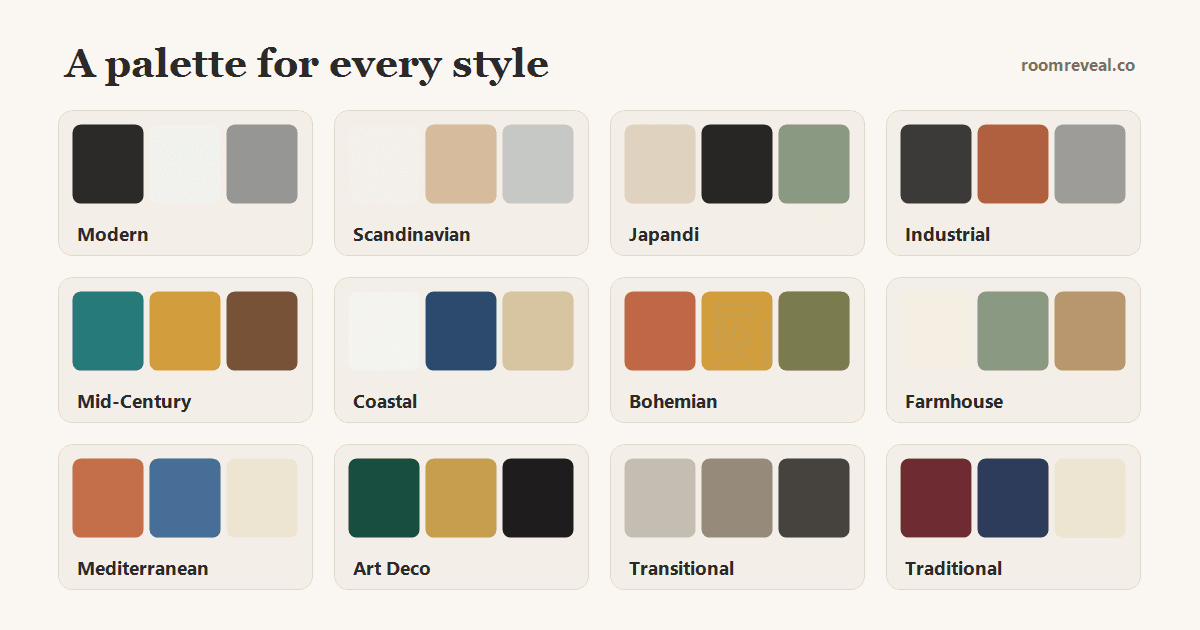
The transitional palette is built almost entirely on neutrals: warm whites and creams, soft beiges and greiges, taupe, mushroom, and a full range of grays from dove to charcoal. These are layered tone-on-tone so the room has depth without strong color. When accent color appears, it's muted and grounded -- a dusty blue, sage green, soft black, or warm brown -- used sparingly in a pillow, a piece of art, or an accent chair rather than across the whole room. Because the color story is so restrained, the work is done by contrast in texture and material: matte against sheen, rough linen against smooth wood, light upholstery against a darker metal. Keep the palette quiet and let the textures supply the richness, and the room reads expensive and timeless rather than plain.
Transitional vs. Contemporary: An Important Difference
Transitional and contemporary are often confused because both look current and both lean neutral, but they pull from different places. Contemporary design is about what's in style right now -- it follows present-day trends, favors crisp straight lines, bolder contrast, and a more minimal, of-the-moment feel. Transitional, by contrast, is intentionally timeless: it anchors itself in classic, traditional forms and softens them with modern simplicity, so it doesn't move with the trends. The practical tell is the furniture. A contemporary room reaches for the newest silhouettes; a transitional room keeps a comfortable, curved, classic shape and simply strips its ornament away. If a space feels warm, balanced, and like it could have looked good a decade ago and will still look good a decade from now, it's transitional; if it feels sharp, current, and tied to today's trends, it's contemporary.
How to Get the Look in Any Room
- Start with a neutral envelope. Paint walls a warm white, greige, or soft gray and keep large pieces in the same tonal family so the room reads calm and cohesive.
- Mix one classic with one clean piece. Pair a traditional shape (rolled-arm sofa, wingback, tufted bench) with a contemporary one (a simple light fixture, a sleek table) in each room so both sides of the blend are present.
- Choose comfort without ornament. Favor substantial, inviting furniture in plain fabrics -- skip the heavy carving, fringe, and busy pattern of full traditional.
- Layer texture instead of color. Build interest with linen, wool, leather, rattan, wood, and brushed metal so the neutral palette feels rich rather than flat.
- Add color in small, muted doses. A dusty blue, sage, or warm brown in pillows or art is plenty; let the neutrals stay in charge.
- Edit your accessories. Keep surfaces relatively clear and styling intentional -- restraint is what separates transitional from traditional.
Common Transitional Style Mistakes
The most common mistake is letting the blend tip too far one way -- so much ornament, dark wood, and pattern that the room becomes simply traditional, or so spare and hard-edged that it becomes plainly modern. The fix is to consciously include both classic and clean elements in every space and check that neither has taken over. The second pitfall is reading "neutral" as "boring": a transitional room with no variation in texture or material ends up flat and lifeless, so layer tactile contrast generously to give the quiet palette depth. The third is over-accessorizing -- crowding surfaces undoes the calm, edited quality that defines the style, so style with restraint and leave space to breathe.
See It in Your Own Room
The easiest way to judge whether transitional suits your space is to see it applied to a room you already know. Upload a photo and preview it restyled with Room Reveal -- test a warm neutral envelope, a classic-meets-clean furniture mix, and layered textures until the space feels both timeless and current. For room-specific inspiration, browse our transitional living room ideas and transitional bedroom ideas, or see how the look adapts to a workspace with transitional home office ideas. And if you're still weighing your options, our guide to 12 interior design styles places transitional design in context alongside its neighbors.
Ready to transform your room?
Upload a photo and see it redesigned in any of our 12 styles.
Try Room RevealLooking for inspiration? Browse style-by-room ideas with tips, palettes, and looks to try in your own space.
Explore room ideas