How to Mix Wood Tones in a Room: A Simple Method for Floors, Furniture, and Trim
How to mix wood tones that actually work together: pick one dominant tone, match the undertones, use contrast on purpose, add a buffer, and skip the matchy-matchy and clashing mistakes.
Room Reveal Team
June 28, 2026
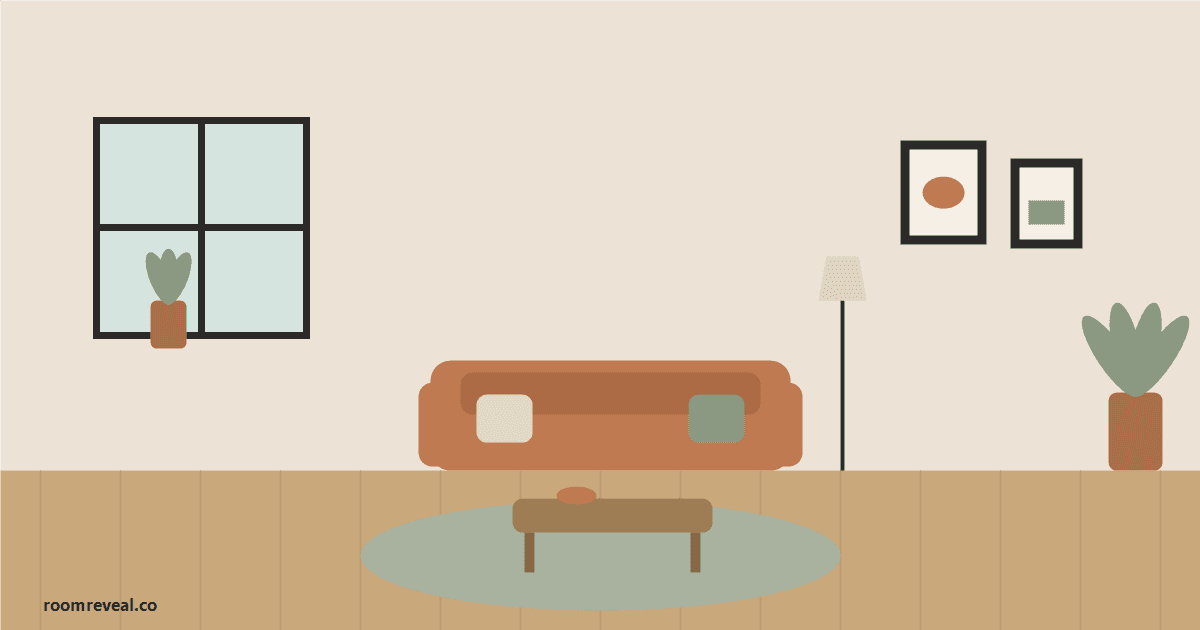
Almost every room has more than one wood tone in it -- the floor, a coffee table, a dining set, a frame, the window trim -- and the fear of clashing them sends a lot of people chasing an impossible goal: making everything match. It rarely works, and when it does the room looks like a showroom set rather than a home. The better goal is wood tones that relate to each other without being identical. That is a learnable skill, not a guessing game. Here is a simple method for mixing wood tones across floors, furniture, and trim so the whole room reads as intentional.
Stop Trying to Match Everything
The single most freeing thing to know is that matching wood tones exactly is neither necessary nor desirable. A floor, a table, and a bookshelf bought to match will almost never match perfectly anyway -- different woods, stains, and ages drift apart -- and the near-miss looks like a mistake. Deliberately varied wood, on the other hand, reads as collected and layered. So let go of "everything must be the same brown." The job is to make your wood tones look like they belong in the same family, which comes down to two things: getting the undertones to agree, and giving the eye a clear dominant tone to settle on.
Find the Undertone First
Undertone matters far more than how light or dark a wood is. Every wood tone leans one of three ways, and this is the thing that clashes when it goes wrong:
- Warm woods pull red, orange, or yellow -- cherry, mahogany, many oaks, honey and golden stains.
- Cool woods pull grey or have an ashy cast -- grey-washed oak, some walnuts, weathered or limed finishes.
- Neutral woods sit in the middle without a strong cast -- many natural oaks and birches.
To read an undertone, set a piece against a plain white sheet of paper in daylight; the cast becomes obvious next to true white. The practical rule: warm tones mix happily with other warm tones, cool with cool, and neutrals play well with both. A warm honey table beside a distinctly cool grey floor is the combination that fights. You do not need identical undertones everywhere, but you want them broadly compatible -- and a neutral piece is the easiest way to bridge two woods that would otherwise argue.
Choose One Dominant Wood Tone
A room needs a wood tone that leads, usually the largest surface -- most often the floor, sometimes a big dining table or built-ins. Let that be your anchor, then treat every other wood as a supporting player that either echoes it or contrasts with it on purpose. A common, reliable ratio is one dominant tone, one secondary tone used on a few pieces, and at most one accent tone in small doses. When every wood in the room competes for lead, the space feels busy; when one clearly leads, the others read as intentional variation rather than chaos.
Use Contrast on Purpose
Once undertones agree, contrast in value -- light versus dark -- is your friend, not your enemy. A dark walnut piece on a pale oak floor looks crisp and deliberate; two woods that are almost-but-not-quite the same brown look like a failed match. So either make woods clearly different or keep them clearly in the same lane -- avoid the near-miss middle. Repeating a tone helps too: if you bring in a dark wood, let it appear in at least two places (say a coffee table and a pair of frames) so it reads as a chosen accent rather than a stray.
Add a Buffer Between Wood Tones
When two woods sit right next to each other and you are not sure they get along, put something between them. A rug breaks up the floor and any wood-legged furniture standing on it. A textile -- a runner, a throw, upholstery -- softens the jump from one tone to the next. Black or matte-metal accents (lamp bases, hardware, a metal frame) act as a neutral referee that lets disparate woods coexist. Greenery does the same job. These buffers are why a room full of mismatched vintage wood can still feel harmonious: the eye gets places to rest between the tones.
Match Wood Tones to Your Style
Different looks lean on wood differently. A mid-century living room is built on warm walnut and teak, usually played against a lighter floor for contrast. A scandinavian living room keeps woods pale and tonal -- birch, ash, light oak -- with very little value contrast, so undertone agreement matters most. A farmhouse living room happily mixes a worn, warm-toned table with painted pieces and reclaimed wood, using the variation as part of the charm. Let your style tell you whether you are aiming for tonal calm or deliberate contrast, then apply the same undertone discipline either way. Our guide to adding texture to a room pairs well here, since wood is one of the main textures doing the work.
Common Wood-Tone Mistakes
- Chasing a perfect match. Near-matches look like mistakes. Either match a tone deliberately in several spots, or contrast clearly.
- Ignoring undertone. Warm-versus-cool is what actually clashes -- not light-versus-dark. Check casts against white paper first.
- No dominant tone. When every wood competes, the room feels restless. Pick a lead and support it.
- A lone accent. A single dark or unusual wood with no echo looks stranded. Repeat it at least once.
- Forgetting the trim and frames. Window trim, doors, and picture frames are wood tones too, and an orange-toned trim can undercut an otherwise cool scheme.
See Your Wood Tones Together Before You Commit
Wood combinations are hard to judge from individual product photos -- the only test that counts is how the tones look together in your actual room and light. Upload a photo of your space and preview different floors, tables, and finishes side by side with Room Reveal before you buy or refinish anything. For the surrounding look, browse mid-century living room ideas and scandinavian living room ideas, and pair this with our guides to adding texture to a room and choosing a color scheme for your home.
Ready to transform your room?
Upload a photo and see it redesigned in any of our 12 styles.
Try Room RevealLooking for inspiration? Browse style-by-room ideas with tips, palettes, and looks to try in your own space.
Explore room ideas