Traditional Style Explained: Origins, Hallmarks, and How to Get the Look
What is traditional interior design? A complete guide to its classic European origins, the symmetrical, layered hallmarks that define it, a working palette, how traditional differs from transitional and classic styles, and how to get the look.
Room Reveal Team
June 26, 2026
Traditional style is the look most people picture when they imagine a timeless, put-together home -- symmetrical rooms, rich wood furniture, layered fabrics, and a sense of comfortable formality that never goes out of fashion. Rooted in 18th- and 19th-century European decorating, it borrows from English, French, and American Colonial interiors and prizes order, craftsmanship, and a feeling of established calm. Where many styles chase the new, traditional design is deliberately classic: it values pieces that look like they could have been passed down, arrangements that feel balanced and intentional, and a palette of warm, restful colors. This guide explains where traditional design came from, the hallmarks that actually define it, the palette and materials that make it work, how it differs from transitional and "classic" styles, and how to get the look in any room.
What Is Traditional Interior Design?
Traditional interior design is a classic, time-honored style drawn from centuries of European and early American decorating. It descends from the formal rooms of Georgian, Victorian, and Colonial homes, and it carries their core values forward: symmetry, proportion, quality craftsmanship, and a layered, collected sense of comfort. Rooms are composed deliberately -- matching lamps flanking a sofa, a pair of chairs facing a fireplace, art hung in balanced arrangements -- so the overall effect reads as orderly and harmonious rather than spontaneous.
At its heart, traditional is about comfort and continuity. Furniture has graceful, familiar silhouettes -- rolled arms, turned legs, carved detail, cabriole curves -- and is built from rich, warm woods like mahogany, cherry, and walnut. Fabrics are soft and layered: damask, florals, plaid, stripes, and plenty of texture. Nothing feels stark or experimental. The look rewards quiet richness and a lived-in, established feeling, the sense of a home that has been thoughtfully assembled over time rather than bought all at once.
The Hallmarks That Define Traditional Style
1. Symmetry and balance
The organizing principle of traditional rooms is symmetry. Furniture is arranged in balanced pairs and around a clear focal point -- usually a fireplace, a large window, or a bed -- with matching lamps, nightstands, or chairs anchoring each side. This deliberate order is what gives traditional spaces their calm, composed, formal feeling.
2. Rich wood furniture with classic silhouettes
Traditional furniture leans on warm, polished hardwoods and time-tested forms: wingback and rolled-arm sofas, cabriole legs, claw feet, turned spindles, and carved detailing. Pieces feel substantial and crafted, often echoing 18th- and 19th-century English and French designs, and they're meant to look enduring rather than trendy.
3. Layered fabrics and pattern
Soft, layered textiles are essential. Damask, toile, florals, plaids, and stripes appear on upholstery, drapery, and pillows, mixed with texture from velvet, linen, and wool. Window treatments are generous -- floor-length drapes, often with valances or trim -- and rooms are softened further with skirted furniture, layered rugs, and plenty of cushions.
4. Architectural detail and trim
Traditional interiors celebrate millwork. Crown molding, wainscoting, chair rails, paneled doors, and decorative ceiling detail give walls depth and a sense of permanence. These architectural touches frame the room and reinforce the style's formal, established character even before the furniture arrives.
5. Curated, symmetrical accessories
Finishing details are classic and collected: framed art in balanced groupings, antique or antique-look accents, porcelain and ceramics, brass or crystal lighting, table lamps, and fresh flowers. Accessories are arranged with the same eye for symmetry as the furniture -- in pairs and tidy vignettes -- so the room feels rich but never cluttered.
The Traditional Palette
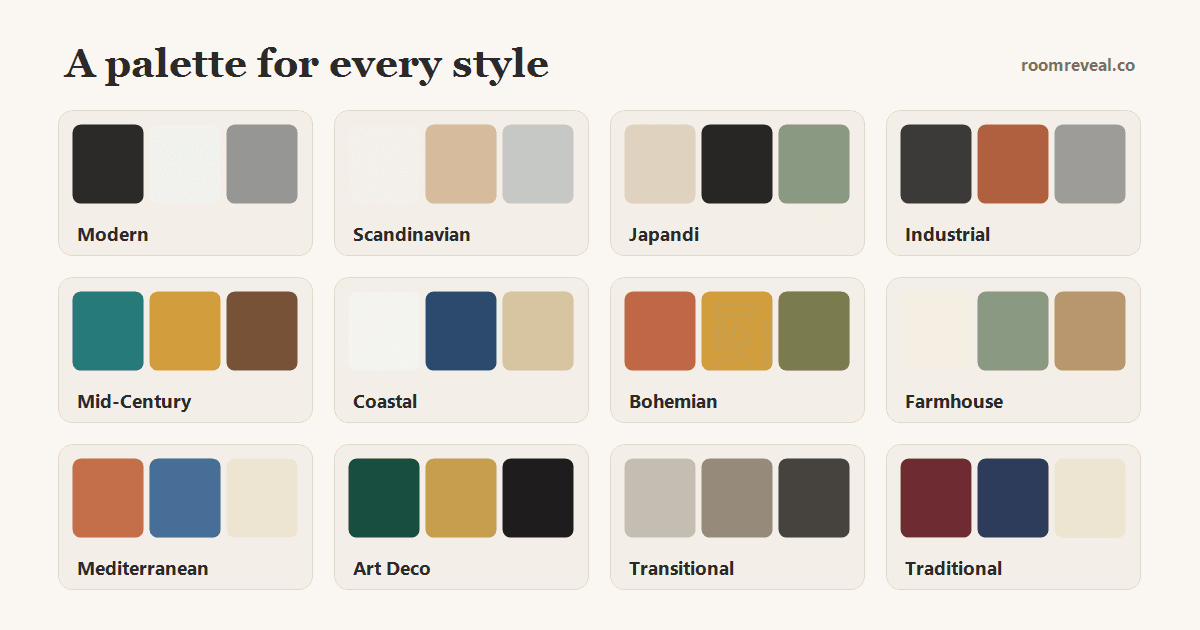
The traditional palette is warm, restful, and rooted in classic neutrals. The foundation tends toward soft, comfortable backgrounds -- cream, beige, taupe, warm white, and gentle greige -- that let the wood tones and fabrics take center stage. Against that base, traditional rooms layer in deeper, timeless colors: rich reds and burgundies, hunter and sage greens, navy and slate blues, and warm golds and ambers, often drawn from the damasks, florals, and rugs in the room. Wood supplies the grounding browns -- mahogany, cherry, walnut -- while accents of brass, gold, and crystal add a quiet shine. The colors are muted and slightly traditional in feel rather than bright or saturated, chosen to feel calm and enduring. The trick is keeping the scheme warm and layered: a soft neutral envelope, a few classic jewel-toned or earthy accents, and the depth of natural wood. A typical room sets cream or greige walls against a navy or deep-red upholstered sofa, warm wood furniture, and gold or brass accents -- harmonious, layered, and unmistakably classic.
Traditional vs. Transitional vs. Classic Style
These three terms overlap, so they're worth untangling. Traditional is the fully classic end of the spectrum -- symmetrical, ornate, layered with pattern and detail, and openly rooted in historical European and Colonial decorating. Transitional style is the popular middle ground: it keeps traditional's comfortable silhouettes and warm, neutral calm but strips back the ornament, pattern, and fussiness and blends in the clean lines and restraint of contemporary design. In short, transitional is traditional updated and pared down for modern tastes -- less carving, fewer florals, simpler window treatments, more neutral palettes. The word classic is used more loosely; it usually describes any timeless, non-trendy look and overlaps heavily with traditional, though it can lean a touch lighter and more flexible. If you love symmetry and rich detail but find full traditional too formal, transitional is the natural step; if you want the warmth and order without the period-room feeling, "classic" or transitional language is the safer guide. Traditional remains the most ornate and history-driven of the three.
How to Get the Look in Any Room
- Build around symmetry. Choose a focal point and arrange furniture in balanced pairs -- matching lamps, flanking chairs, a centered sofa or bed -- to set the composed, formal tone instantly.
- Invest in warm wood and classic silhouettes. A wingback chair, a rolled-arm sofa, or a cherry or mahogany case piece anchors the room in timeless craftsmanship.
- Layer fabrics and pattern. Mix damask, florals, plaid, and stripes with velvet and linen across upholstery, drapery, and pillows for richness and depth.
- Add architectural detail. Crown molding, wainscoting, or a chair rail -- even applied trim or paneling -- gives walls the permanence the style depends on.
- Keep the palette warm and restful. Start with a soft neutral envelope, then layer in a few classic jewel-toned or earthy accents and gold or brass shine.
- Finish with curated accessories. Framed art in balanced groupings, antique-look accents, table lamps, and fresh flowers complete the layered, collected feel.
Common Traditional Style Mistakes
The most common mistake is letting traditional tip into stuffy or dated -- matching furniture suites bought as a set, heavy dark everything, and so much pattern and trim that the room feels like a period museum. The fix is to edit and mix: combine pieces of different ages and woods, let a few surfaces breathe, and balance the dark tones with light walls and airy textiles so the space reads collected rather than oppressive. A second pitfall is over-formality -- a room so precious that no one wants to sit in it; traditional should be comfortable, so prioritize soft, usable upholstery and a genuinely livable layout. The third is ignoring scale and clutter: too many small accessories or undersized furniture in a large room undercuts the style's sense of proportion. Choose fewer, better pieces, arrange them with symmetry, and give them room to be seen. Keep the palette warm, the silhouettes classic, and the layering intentional, and the look stays elegant and timeless rather than fusty.
See It in Your Own Room
The easiest way to judge whether traditional style suits your space is to see it applied to a room you already know. Upload a photo and preview it restyled with Room Reveal -- test warm neutral walls, classic wood furniture, layered fabrics, and a few jewel-toned or brass accents until the space feels balanced and timeless. For room-specific inspiration, browse our traditional living room ideas and traditional bedroom ideas, or see how the look elevates a workspace with traditional home office ideas. And if you're still weighing your options, our guide to 12 interior design styles places traditional design in context alongside its neighbors.
Ready to transform your room?
Upload a photo and see it redesigned in any of our 12 styles.
Try Room RevealLooking for inspiration? Browse style-by-room ideas with tips, palettes, and looks to try in your own space.
Explore room ideas