Scandinavian Style Explained: Origins, Hallmarks, and How to Get the Look
What is Scandinavian design? A complete guide to its Nordic origins, the hallmarks that define it, a working palette, the meaning of hygge, and how to get the look.
Room Reveal Team
June 25, 2026
Few looks have travelled as far from home as Scandinavian design. Born in the cold, dark north, it has become the default language of light, calm, livable interiors all over the world -- the pale wood, the white walls, the single sheepskin thrown over a simple chair. But "Scandi style" is more than a flat-pack aesthetic. This guide explains where it came from, the hallmarks that actually define it, the palette and materials that make it work, what people really mean by hygge, and how to get the look in any room without it sliding into either a cold showroom or a cluttered imitation.
What Is Scandinavian Design?
Scandinavian design is a movement that emerged in the Nordic countries -- Denmark, Sweden, Norway, Finland, and Iceland -- through the early-to-mid 20th century, reaching the wider world in the 1950s. It grew from a democratic ideal: that beautiful, functional things should be affordable and made for everyday life, not reserved for the wealthy. Long, dark winters and limited daylight shaped its obsession with light, and a deep cultural connection to nature shaped its materials.
The result is a style defined by simplicity, function, and warmth in equal measure. Forms are clean and uncluttered, but never cold, because natural wood, soft textiles, and a glow of warm light keep the minimalism human. Where some minimal styles strip a room back to feel impressive, Scandinavian design strips it back to feel comfortable -- a space you actually want to spend a long evening in.
The Hallmarks That Define Scandinavian Style
1. Light, and lots of it
Everything starts with maximizing light. Walls are white or very pale, windows are left largely unobstructed, and surfaces are chosen to bounce daylight around the room. In a part of the world where winter daylight is scarce, brightness isn't a style choice -- it's survival, translated into design. Reflective whites and pale floors make even a small, north-facing room feel open and awake.
2. Pale natural wood
If mid-century leans on dark teak and walnut, Scandinavian leans on the opposite: light woods like ash, birch, pine, and pale oak, usually in a matte or oiled finish that keeps the grain honest. Wood appears on floors, furniture frames, and legs, and it does the crucial job of warming up all that white so the room reads as cozy rather than clinical.
3. Functional, unfussy furniture
Pieces are simple, well-proportioned, and built to be used. Clean silhouettes, gentle curves, and visible craftsmanship matter more than ornament -- a Scandinavian chair earns its place by being genuinely comfortable and quietly beautiful, not by showing off. Clutter is the enemy; generous, often concealed storage keeps surfaces clear.
4. Layered natural textiles
This is where the warmth lives. Wool throws, linen and cotton bedding, a chunky knit, a flat-weave rug, and the near-obligatory sheepskin over a chair add tactile softness against the hard, bright surfaces. Texture, not color, does most of the decorating -- which is why a nearly all-white Scandi room can still feel rich and inviting.
5. Hygge: comfort as the goal
The Danish word hygge (roughly, cozy contentment) is the emotional core of the style. Practically, it shows up as warm, low, layered lighting instead of one harsh overhead -- table lamps, candles, a soft pendant -- plus the textiles and natural materials that make a room feel like a refuge. Scandinavian design isn't minimalism for its own sake; the minimalism is in service of comfort.
The Scandinavian Palette
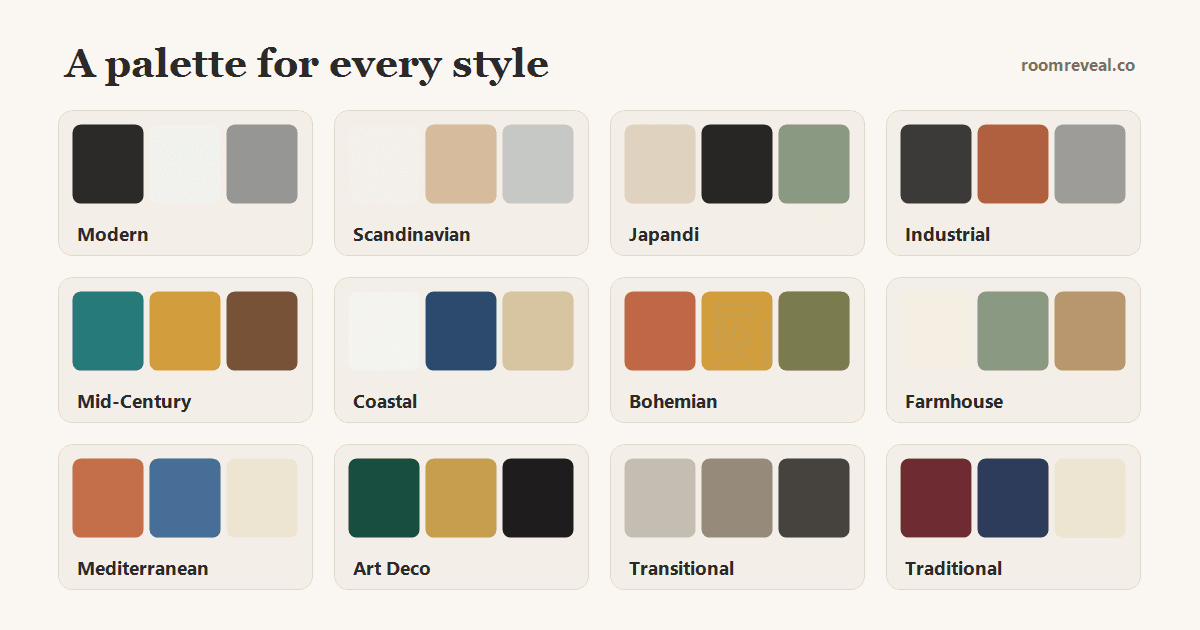
The foundation is a base of white, soft grey, and warm off-white, kept deliberately light and airy. Pale wood tones supply most of the depth and warmth, while accents stay muted and drawn from nature: dusty sage and forest green, soft black for graphic contrast, gentle blush, and the occasional muted blue or ochre. Black is used sparingly but effectively -- in slim legs, window frames, or a single light fixture -- to give the softness some backbone. The rule of thumb is to keep the bulk of the room pale and neutral, let wood and greenery add life, and use color in small, quiet doses. Avoid heavy, saturated walls and high-contrast schemes; they fight the light that the whole style is built around.
How to Get the Look in Any Room
- Brighten the base. Paint walls white or a very pale warm grey and keep windows as clear as possible so daylight does the work.
- Add pale wood. Anchor the room with one light-wood piece -- a table, bed frame, or sideboard in ash, birch, or pale oak -- to warm up the whites.
- Layer textiles for warmth. Combine a wool throw, linen cushions, a soft rug, and a sheepskin so the room feels cozy through texture rather than color.
- Edit ruthlessly, then hide the rest. Keep surfaces clear and lean on closed storage; a few intentional objects beat a crowded shelf.
- Light it low and warm. Use several small, warm light sources -- table lamps, a soft pendant, candles -- instead of one bright ceiling fixture.
- Bring in the outdoors. A few green plants, a branch in a vase, or a stoneware vessel keep the calm palette feeling alive.
- Choose muted, natural accents. One sage cushion or a soft-black frame adds interest without breaking the airy mood.
Common Scandinavian Style Mistakes
The most common misstep is mistaking Scandinavian for cold, hospital-white minimalism -- all white, no wood, no textiles -- which produces a room that looks tidy but feels unwelcoming. The fix is always more natural warmth: wood tones, layered fabrics, and soft light. The second mistake is over-decorating in the name of "hygge," piling on so many throws and trinkets that the clean simplicity disappears; the style is cozy and edited, never cluttered. The third is harsh, single-source overhead lighting, which flattens the room and kills the mood the whole look depends on. Get the light and the wood right, and Scandinavian style almost takes care of itself.
See It in Your Own Room
The fastest way to understand Scandinavian style is to see it applied to a space you already know. Upload a photo of your room and preview it restyled with Room Reveal -- experiment with pale wood, a bright neutral base, and layered natural textures until the balance feels warm rather than stark. For room-specific inspiration, browse our Scandinavian living room ideas and Scandinavian bedroom ideas, or see how the look adapts to a workspace with Scandinavian home office ideas. And if you're still deciding between looks, our guide to 12 interior design styles puts Scandinavian design in context alongside its neighbors.
Ready to transform your room?
Upload a photo and see it redesigned in any of our 12 styles.
Try Room RevealLooking for inspiration? Browse style-by-room ideas with tips, palettes, and looks to try in your own space.
Explore room ideas