Mediterranean Style Explained: Origins, Hallmarks, and How to Get the Look
What is Mediterranean interior design? A complete guide to its sun-washed origins, the warm, textured hallmarks that define it, a working palette, how Mediterranean differs from Tuscan and Spanish styles, and how to get the look.
Room Reveal Team
June 26, 2026
Mediterranean style is the look of long lunches, thick stucco walls, and light pouring through an arched doorway -- a warm, earthy, sun-soaked aesthetic drawn from the coastal homes of Spain, Italy, Greece, and the south of France. It feels relaxed and timeless rather than trendy, built on natural materials, handmade texture, and a palette borrowed straight from the landscape: terracotta earth, olive groves, whitewashed walls, and the blue of the sea. Where many styles chase polish, Mediterranean celebrates the imperfect and the artisanal -- a hand-glazed tile, a plastered wall that catches the light, a worn wood beam. This guide explains where Mediterranean design came from, the hallmarks that actually define it, the palette and materials that make it work, how it differs from Tuscan and Spanish styles, and how to get the look in any room.
What Is Mediterranean Interior Design?
Mediterranean interior design takes its cues from the warm-climate regions that ring the Mediterranean Sea, where homes have been shaped for centuries by sun, stone, and an indoor-outdoor way of living. Thick masonry walls keep interiors cool, deep-set windows and arches frame the light, and rooms open easily to courtyards and terraces. The result is an architecture-led style: the character comes as much from plastered walls, tiled floors, arched openings, and exposed beams as from the furniture inside them.
At its heart, Mediterranean is about warmth, texture, and ease. Surfaces are natural and tactile -- lime-washed plaster, terracotta, hand-painted ceramic, wrought iron, rustic wood. Colors come from the surrounding land and water rather than a paint deck. And the overall feeling is unhurried and welcoming, a little weathered, designed for gathering and for living with the windows open. It rewards natural light and patina, so it tends to look better the more lived-in it becomes.
The Hallmarks That Define Mediterranean Style
1. Textured, plastered walls and arches
The signature backdrop is a hand-finished wall -- lime wash, Venetian plaster, or stucco -- with a soft, matte, slightly uneven surface that catches light and shadow. Arched doorways, niches, and rounded openings soften the architecture and are one of the style's most recognizable features, giving rooms a graceful, old-world flow.
2. Terracotta and patterned tile
Floors and surfaces are grounded in earthenware. Terracotta pavers, hand-glazed ceramic, and decorative encaustic or zellige tile bring warmth and craft underfoot and onto backsplashes, stair risers, and courtyards. The tilework is often the boldest pattern in the room and a direct nod to the style's Spanish, Moroccan, and Italian roots.
3. Natural materials and exposed wood
Mediterranean rooms lean on raw, honest materials: rustic wood beams, carved or turned furniture, woven rush and cane, jute, linen, and wrought iron for railings, light fixtures, and hardware. Nothing looks too sleek -- the appeal is in the grain, the forging marks, and the handmade quality of each piece.
4. Warm, earthy color drawn from the landscape
The palette comes straight from the region -- terracotta and ochre earth, olive and sage greens, whitewashed walls, and sea-blue accents. Colors are warm, sun-faded, and grounded, layered so the room feels enveloping and connected to the outdoors rather than bright or cool.
5. Indoor-outdoor living and greenery
The style assumes a connection to the outside. Rooms are kept airy and uncluttered to let light move through, and plants are everywhere -- potted olive and citrus trees, trailing vines, herbs, and terracotta planters that blur the line between courtyard and living room. Wrought-iron lanterns and woven textiles complete the relaxed, alfresco mood.
The Mediterranean Palette
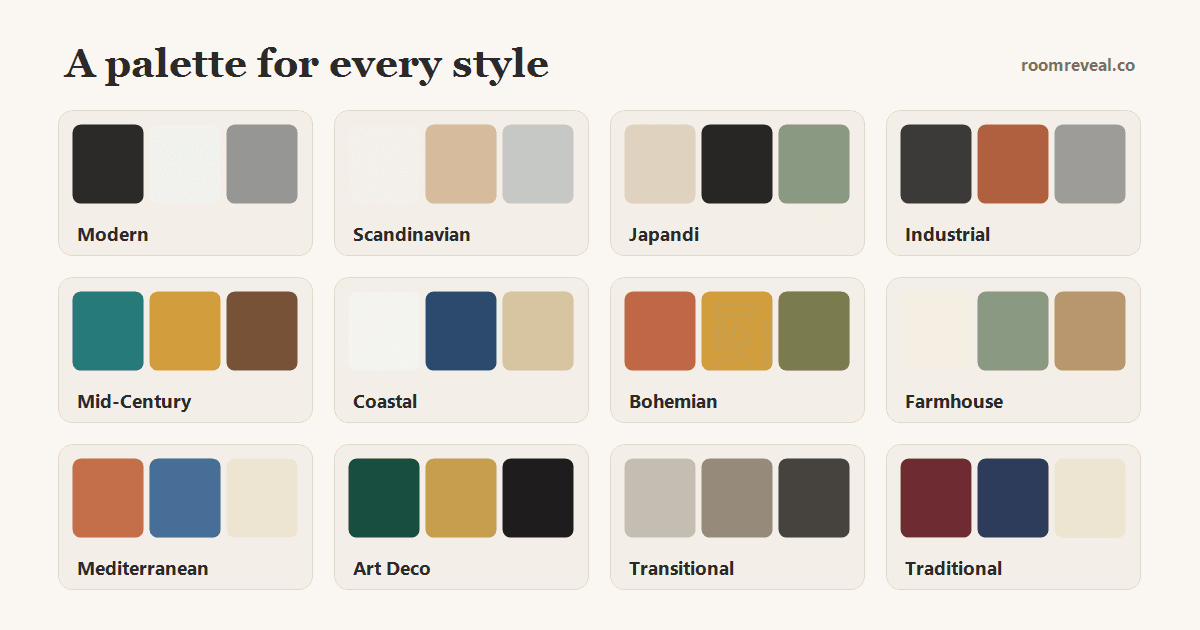
The Mediterranean palette is borrowed directly from sun, soil, and sea. The foundation is warm and pale -- whitewashed walls, cream, sand, and soft ivory plaster that bounce the strong light and keep interiors feeling cool. Against that, earth tones supply the warmth: terracotta, ochre, clay, and burnt sienna pulled from the tile and the landscape. Greens come from the olive grove and herb garden -- olive, sage, and muted moss -- while the blues range from a soft sea-glass aqua to a deeper cobalt or Greek-island blue used as an accent on shutters, ceramics, and textiles. Wood and iron add grounding browns and blacks. The trick is keeping the scheme warm and sun-faded rather than crisp: choose colors that look slightly weathered, as if bleached by the sun, and let the natural textures of plaster, terracotta, and wood carry as much of the character as the color itself. A typical room sets warm white walls against terracotta floors, a few olive and sea-blue accents, and the honey tones of natural wood -- earthy, layered, and unmistakably sun-drenched.
Mediterranean vs. Tuscan vs. Spanish Style
Mediterranean is an umbrella term, and two of its best-known regional cousins are worth distinguishing. Tuscan style is the Italian, countryside-leaning branch: it skews warmer and heavier, with richer ochre and gold tones, darker rustic woods, wrought iron, and a more old-world, formal feel built around stone and terracotta. It is Mediterranean turned cozy and earthen. Spanish (or Spanish Colonial) style emphasizes the Moorish and Andalusian influence -- bold patterned tile, dark carved wood, dramatic wrought iron, red-clay roofs, and arched architecture with more contrast and intricate ornament. Broad Mediterranean design, by comparison, pulls from the whole region -- including the brighter, breezier Greek and coastal-French ends -- so it tends to read lighter, airier, and more whitewashed than Tuscan and less ornately patterned than Spanish. Think of Tuscan as the warm Italian interior, Spanish as the tiled, iron-worked Andalusian one, and Mediterranean as the lighter, sun-washed style that encompasses them both. Coastal style shares the sea-blue palette but is cooler, crisper, and beach-driven, where Mediterranean stays warm, earthy, and texture-led.
How to Get the Look in Any Room
- Start with a warm, textured wall. A lime-wash, plaster, or matte stucco-look finish in warm white or sand instantly sets the Mediterranean mood and softens the whole room.
- Ground the room in terracotta or tile. Bring in earthenware through flooring, a tiled backsplash, or hand-glazed accents to anchor the space in warmth and craft.
- Layer natural materials. Mix rustic wood, woven cane and jute, linen, and a little wrought iron so every surface has honest, tactile texture.
- Pull color from the landscape. Add olive and sage greens and a few sea-blue accents against the warm neutral base, keeping everything slightly sun-faded.
- Add arches and curves where you can. An arched mirror, a curved doorway, or rounded furniture echoes the architecture and softens hard lines.
- Bring the outdoors in. Potted olive or citrus, trailing greenery, terracotta planters, and iron lanterns deliver the relaxed, alfresco feeling at the core of the style.
Common Mediterranean Style Mistakes
The most common mistake is going too literal and turning the room into a themed taverna -- grape motifs, faux-fresco murals, and heavy "Tuscan kitchen" cliches that read as a stage set. The fix is to lead with materials and light: real texture, warm neutrals, and a few honest natural finishes do far more than decorative props. A second pitfall is making everything dark and heavy; authentic Mediterranean interiors are full of light and air, so balance the rustic wood and iron with whitewashed walls and breathing room rather than crowding the space. The third is reaching for slick, machine-perfect surfaces -- glossy tile, polished stone, flawless finishes -- which strips out the handmade patina the style depends on. Choose matte over shiny, handmade over uniform, and weathered over pristine. Keep the palette warm and sun-faded, let the textures stay tactile, and leave room for light and greenery, and the look stays relaxed and timeless rather than costumey.
See It in Your Own Room
The easiest way to judge whether Mediterranean style suits your space is to see it applied to a room you already know. Upload a photo and preview it restyled with Room Reveal -- test a warm plaster wall, terracotta tones, natural wood, and a few olive and sea-blue accents until the space feels sun-washed and welcoming. For room-specific inspiration, browse our Mediterranean living room ideas and Mediterranean bedroom ideas, or see how the look warms a workspace with Mediterranean home office ideas. And if you're still weighing your options, our guide to 12 interior design styles places Mediterranean design in context alongside its neighbors.
Ready to transform your room?
Upload a photo and see it redesigned in any of our 12 styles.
Try Room RevealLooking for inspiration? Browse style-by-room ideas with tips, palettes, and looks to try in your own space.
Explore room ideas