Farmhouse Style Explained: Origins, Hallmarks, and How to Get the Look
What is farmhouse interior design? A complete guide to its rural origins, the warm, practical hallmarks that define it, a working palette, how modern farmhouse differs from traditional farmhouse, and how to get the look.
Room Reveal Team
June 26, 2026
Farmhouse style is the look that made "cozy" a design movement. It's the warm, lived-in, slightly imperfect room that feels like it has a story -- worn wood, a deep sink, a wide plank floor, and the sense that the space was built to be used rather than admired. It's also one of the most over-applied and misunderstood styles, often reduced to a chalkboard sign and a galvanized bucket. True farmhouse design isn't a set of props; it's a practical, honest, materials-first approach rooted in real rural homes, where everything had to earn its keep. This guide explains where farmhouse style came from, the hallmarks that actually define it, the palette and materials that make it work, how modern farmhouse differs from the traditional original, and how to get the look in any room.
What Is Farmhouse Interior Design?
Farmhouse design takes its cues from working country homes -- the kind built for function long before they were styled for looks. Think wide plank floors that could take a muddy boot, sturdy wooden tables sized for a crowd, open shelves stocked with everyday dishes, and a big apron-front sink at the center of family life. The aesthetic grew out of necessity: durable, natural materials, generous storage, and comfortable, well-worn furniture that improved with age rather than wearing out.
That origin is the key to the look. Farmhouse isn't about decorating with "rustic" objects so much as honoring the qualities of a real working home -- warmth, practicality, honesty of material, and a welcoming, unfussy comfort. Where modern strips a room to clean planes and traditional layers up formality, farmhouse leans into texture, age, and use. A genuinely farmhouse space feels relaxed and hospitable because the materials are natural and the room is clearly built to be lived in, not preserved.
The Hallmarks That Define Farmhouse Style
1. Natural, well-worn wood
Wood is the backbone of the style -- and the more honest and weathered, the better. Wide plank floors, exposed ceiling beams, reclaimed-look tables, and chunky open shelves bring warmth and grain to every room. The wood is usually matte and natural rather than glossy, and a little wear or patina is a feature, not a flaw.
2. A warm, neutral, light-driven palette
Farmhouse rooms are built on soft, warm neutrals -- creamy whites, oatmeal, warm gray, and taupe -- that keep the space bright and airy. The pale envelope is what lets the natural wood and worn textures stand out, and it gives the cozy, layered look room to breathe instead of feeling dark or heavy.
3. Practical, comfortable, oversized furniture
Furniture is substantial, sturdy, and made for real use: a big farmhouse dining table, a deep slipcovered sofa, a generous bench, a solid hutch. Comfort and durability matter more than sleekness, and slipcovers, washable fabrics, and forgiving finishes reflect the style's roots in everyday family living.
4. Vintage, handmade, and utilitarian touches
Character comes from pieces that look earned: enamelware, stoneware crocks, woven baskets, a vintage ladder, simple ironstone, and humble handmade objects. These utilitarian, slightly imperfect items give a farmhouse room its collected-over-time warmth -- the opposite of a showroom.
5. Cozy, layered textiles
Soft, natural-fiber textiles are everywhere: linen and cotton, chunky knit throws, ticking stripe, simple gingham or buffalo check, and a worn rug underfoot. Layering tactile fabrics is how a neutral farmhouse room turns genuinely cozy rather than plain.
The Farmhouse Palette
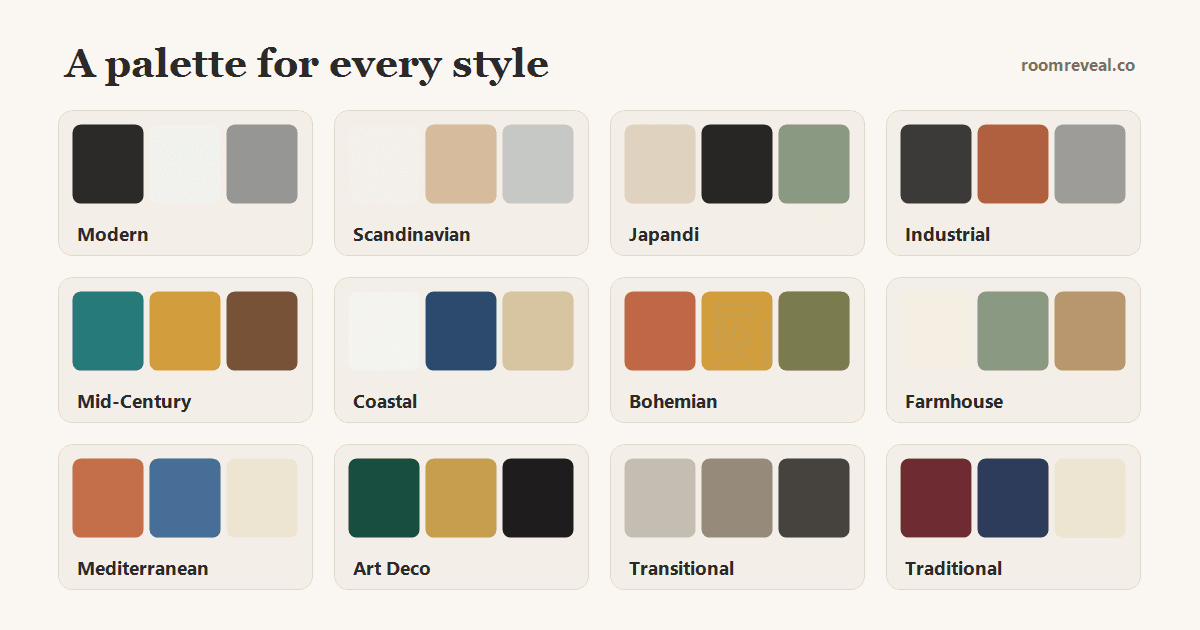
The farmhouse palette is grounded in warm whites and creams -- the classic backdrop that keeps the look bright -- layered with oatmeal, warm gray, greige, and soft taupe. Natural wood tones, from honey to weathered walnut, supply the warmth, while black appears in small, grounding doses through iron hardware, window frames, light fixtures, and a sink faucet. When color enters, it stays muted and pastoral: sage green, soft sky blue, faded denim, warm terracotta, or a dusty ochre, used in a rug, a cabinet, or textiles rather than across the whole room. Because the color story is so soft, the work is done by texture and contrast in material -- matte wood against crisp white, woven baskets against smooth ceramic, black iron against pale linen. Keep the envelope warm and bright and let the wood and textiles carry the depth, and the room reads cozy and timeless rather than busy.
Modern Farmhouse vs. Traditional Farmhouse: An Important Difference
Most of what people picture today is modern farmhouse, and it's worth separating from the traditional original because they pull in different directions. Traditional farmhouse is fuller and more rustic -- more wood tones, more vintage pattern, more collected clutter, antiques, and a genuinely old, weathered feel throughout. Modern farmhouse takes that warmth and cleans it up: a crisper white envelope, simpler lines, more negative space, black accents, and just a few rustic touches rather than a roomful. The practical tell is the contrast and the edit. A traditional farmhouse room layers warm wood and vintage texture wall to wall; a modern farmhouse room sets a few honest, rustic elements against bright white and clean-lined furniture, often with sharp black hardware for definition. If a space feels soft, layered, and antique, it's traditional farmhouse; if it feels bright, crisp, and pared back with black accents, it's modern farmhouse. Both are "right" -- knowing which one you want keeps the look from drifting into a muddled middle.
How to Get the Look in Any Room
- Start with a warm white envelope. Paint walls a creamy or soft warm white and keep the backdrop bright so natural wood and texture can stand out.
- Bring in honest, natural wood. Add a wood table, open shelving, beams, or a plank-look floor in a matte, natural finish -- a little wear is welcome.
- Choose comfortable, sturdy furniture. Favor substantial, made-for-use pieces -- a deep slipcovered sofa, a big table, a solid bench -- over sleek or delicate ones.
- Ground it with black iron. Use black hardware, fixtures, and frames in small doses to give a soft, neutral room crisp definition (especially for a modern farmhouse look).
- Layer cozy, natural textiles. Build warmth with linen, cotton, knit throws, ticking, or check, plus a worn rug underfoot.
- Add character with vintage utilitarian pieces. Stoneware, baskets, enamelware, and humble handmade objects give the collected-over-time feeling -- skip the mass-produced "farmhouse" signage.
Common Farmhouse Style Mistakes
The most common mistake is treating farmhouse as a theme rather than a feeling -- piling on mass-produced signs, slogans, and matchy "farmhouse" decor sets until the room reads like a store display instead of a home. The fix is to lead with honest materials and a few genuine vintage pieces, and let the warmth come from wood and texture rather than props. The second pitfall is going too gray and cold: a farmhouse room built on cool grays and stark white loses the cozy heart of the style, so keep whites and neutrals warm and add real wood tone. The third is forgetting the practical, lived-in quality at the root of the look -- over-styling every surface undoes the relaxed, comfortable ease that defines farmhouse, so leave room for the space to feel used.
See It in Your Own Room
The easiest way to judge whether farmhouse suits your space is to see it applied to a room you already know. Upload a photo and preview it restyled with Room Reveal -- test a warm white envelope, natural wood, black accents, and layered textiles until the space feels cozy and welcoming. For room-specific inspiration, browse our farmhouse kitchen ideas and farmhouse living room ideas, or see how the look softens a bedroom with farmhouse bedroom ideas. And if you're still weighing your options, our guide to 12 interior design styles places farmhouse design in context alongside its neighbors.
Ready to transform your room?
Upload a photo and see it redesigned in any of our 12 styles.
Try Room RevealLooking for inspiration? Browse style-by-room ideas with tips, palettes, and looks to try in your own space.
Explore room ideas