Coastal Style Explained: Origins, Hallmarks, and How to Get the Look
What is coastal interior design? A complete guide to its seaside origins, the light, breezy hallmarks that define it, a working palette, how it differs from nautical decor, and how to get the look.
Room Reveal Team
June 25, 2026
Coastal style is the look people reach for when they want a room to feel like a deep breath -- airy, sun-washed, and calm, as if the windows were always open to a sea breeze. It's also one of the most misunderstood styles, often flattened into anchors, ropes, and "Gone to the Beach" signs. True coastal design isn't a theme park of nautical props; it's a light-driven, material-led approach that borrows the colors and textures of the shoreline to make any space feel relaxed and open. This guide explains where coastal style came from, the hallmarks that actually define it, the palette and materials that make it work, how it differs from literal nautical decor, and how to get the look even far from the water.
What Is Coastal Interior Design?
Coastal design takes its cues from life near the water -- the bright, reflected light of a beach house, the soft blues and greens of sea and sky, the pale sand underfoot, and the worn, salt-bleached wood of a dock or weathered shingle. Its modern form grew out of seaside vacation homes, where the whole point was to feel the opposite of a dark, formal city interior: light flooding in, nothing too precious, and a palette pulled straight from the view outside. The goal was always comfort and ease rather than show.
That origin is the key to the look. Coastal isn't about decorating with the beach so much as borrowing the beach's qualities -- light, air, and natural texture. Where industrial celebrates raw structure and traditional layers up formality, coastal strips a room back to brightness and breathability. A genuinely coastal space could have almost no "beach" objects in it at all and still read coastal because the light, color, and materials are doing the work.
The Hallmarks That Define Coastal Style
1. Light, airy, and open above all
The single most important quality is lightness. Coastal rooms maximize natural light, keep window treatments sheer or absent, and use pale colors to bounce brightness around. The feeling is open and uncluttered, with space to breathe -- a room that feels like morning sun on a porch rather than a heavy, closed-in interior.
2. A sea-and-sand palette
Color comes straight from the shoreline: crisp whites and soft creams as the base, layered with the blues and greens of water, the sandy beiges and warm neutrals of the beach, and gentle accents of seafoam, aqua, or driftwood gray. The whole scheme stays soft and sun-faded rather than bold or saturated.
3. Natural, organic materials and textures
Texture carries the style: weathered and whitewashed wood, rattan and wicker, jute and sisal rugs, linen and cotton slipcovers, rope, and woven seagrass. These natural, slightly casual materials add warmth and a hand-touched, breezy quality that keeps the pale palette from feeling sterile.
4. Relaxed, comfortable, slipcovered furniture
Furniture is made to be lived in -- soft, low-key, and unfussy. Think slipcovered sofas in white or linen, comfortable lounge chairs, and pieces in light or whitewashed finishes. Nothing is too formal or too precious; the whole room invites you to flop down with sandy feet.
5. Restrained natural accents, not literal props
The best coastal rooms gesture at the sea rather than spelling it out: a bowl of shells, a piece of coral, a glass jar of beach finds, botanical or seascape art, and lots of greenery. The references are subtle and natural, used sparingly so the room feels like a breezy home, not a souvenir shop.
The Coastal Palette
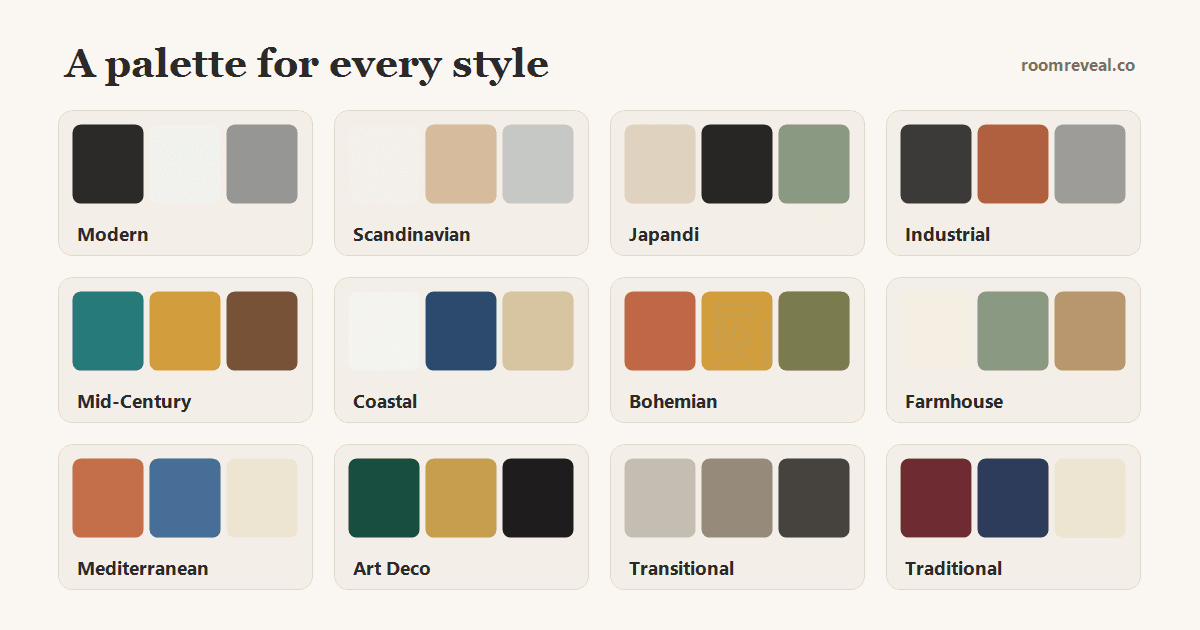
The coastal palette is built on a foundation of white, off-white, and warm sandy neutrals that keep everything light and reflective. Onto that base go the colors of water and sky -- soft blues, seafoam and sage greens, pale aqua -- used as the dominant accent, plus the driftwood grays and tans of weathered wood and rope. The discipline is to keep every color soft and slightly muted, as if bleached by sun and salt; bright primary "beach ball" colors break the spell instantly. Natural materials supply much of the warmth and depth, so the actual paint scheme can stay simple: a pale neutral envelope, blue-green accents in textiles and art, and natural wood and woven tones tying it together.
Coastal vs. Nautical: An Important Difference
It's worth separating coastal from strict nautical decor, because conflating them is the most common way the style goes wrong. Nautical is a literal theme -- navy-and-white stripes, anchors, ship's wheels, rope knots, and red accents -- that leans hard on maritime symbols. Coastal is broader and softer: it's about light, airy spaces and a sea-inspired palette, not a checklist of boat objects. You can absolutely use a touch of nautical (a single striped pillow, a length of rope) as an accent within a coastal room, but a coastal space gets its identity from brightness, natural texture, and soft color -- not from how many anchors are on the wall. Keep the references subtle and the room reads timeless; pile on the props and it reads like a theme.
How to Get the Look in Any Room
- Chase the light first. Maximize natural light, swap heavy drapes for sheer linen or leave windows bare, and paint walls a soft white or pale neutral so the room feels bright and open.
- Pull your palette from the shoreline. Start with white and sand, then add soft blues and greens as accents in textiles, art, and pottery -- keeping every color gently muted rather than vivid.
- Layer natural textures. Bring in rattan, jute, linen, whitewashed wood, and seagrass so the pale scheme feels warm and tactile instead of flat.
- Choose relaxed, slipcovered furniture. Favor soft, casual, light-finished pieces you can sink into; avoid anything stiff, dark, or formal.
- Reference the sea sparingly. A bowl of shells, a piece of driftwood, a seascape, and plenty of greenery suggest the coast far better than a wall of literal beach signs.
- Keep it uncluttered. Edit surfaces and let space breathe -- the openness and airiness are doing as much for the look as the color.
Common Coastal Style Mistakes
The biggest pitfall is tipping into kitsch -- treating "coastal" as a theme to buy by the kit, until the room is buried in anchors, rope, starfish, and beach signs and reads like a gift shop. The fix is restraint: choose a few natural, characterful references and let the light and texture do the rest. The second mistake is reaching for bright, saturated "beach" colors -- primary blues and bold turquoise -- which break the calm; keep every hue soft and sun-faded instead. The third is forgetting texture: a pale, all-white room with no rattan, linen, jute, or weathered wood ends up feeling cold and bare rather than breezy, so layer natural materials generously to give the lightness warmth.
See It in Your Own Room
The easiest way to judge whether coastal suits your space is to see it applied to a room you already know. Upload a photo and preview it restyled with Room Reveal -- test a soft white envelope, blue-green accents, and natural woven textures until the space reads bright and breezy. For room-specific inspiration, browse our coastal living room ideas and coastal bedroom ideas, or see how the look adapts to a workspace with coastal home office ideas. And if you're still weighing your options, our guide to 12 interior design styles places coastal design in context alongside its neighbors.
Ready to transform your room?
Upload a photo and see it redesigned in any of our 12 styles.
Try Room RevealLooking for inspiration? Browse style-by-room ideas with tips, palettes, and looks to try in your own space.
Explore room ideas